


Peanut Butter Dog Treats: Is Peanut Butter Safe for Dogs?
Peanut Butter Dog Treats: Is Peanut Butter Safe for Dogs?
A pet parent's guide to picking safe peanut butter dog treats, reading labels for xylitol, portioning by weight, and deciding whether grain-free is right for your dog.
Open a jar of peanut butter and watch what happens. Ears perk up, a nose appears at your elbow, and suddenly your dog is sitting more politely than they did all week. It's no surprise peanut butter dog treats are a favorite in so many homes.
But there's one ingredient hiding in some jars that can turn a sweet moment into an emergency vet visit. The good news: once you know what to look for, peanut butter is one of the easiest, most useful treats you can share.
This guide covers exactly what makes peanut butter safe or unsafe, how much your dog can have by body weight, how to read a label in five seconds, and when grain free peanut butter dog treats actually make sense.
Quick answer: Yes, plain peanut butter is safe for most dogs in small amounts, as long as it contains no xylitol (also sold as "birch sugar").
- Choose unsalted, unsweetened peanut butter or treats made for dogs.
- Keep all treats, peanut butter included, under 10% of your dog's daily calories.
- Skip or limit it for dogs with pancreatitis, weight concerns, or a known peanut allergy, and ask your vet first.
Is Peanut Butter Safe for Dogs?
For most healthy dogs, yes. The American Kennel Club notes that peanut butter offers protein, healthy fats, vitamins B and E, and niacin, and that unsalted or dog-specific versions are the healthiest pick.
The peanut itself isn't the problem. The problem is what some brands add to it, and how easy it is to overdo a food this rich.
Why dogs love it (and why it works as a treat)
- High value: the smell and taste make it a top-tier reward for training.
- Sticky texture: it slows licking, which makes it ideal for enrichment toys and lick mats.
- Great for hiding pills: a small dab wraps around most tablets.
- Easy to find: xylitol-free options are in nearly every grocery store.
The four real risks to know
| Risk | Why it matters | How serious | What to do |
|---|---|---|---|
| Xylitol | Sugar substitute that triggers a dangerous insulin release in dogs | Emergency | Never buy a jar or treat with xylitol or birch sugar |
| High fat and calories | About 94 calories and 8 g of fat per tablespoon | Moderate | Portion by weight; avoid for dogs prone to pancreatitis |
| Added salt and sugar | Adds sodium and empty calories dogs don't need | Low to moderate | Choose "peanuts only" or "peanuts and salt" at most |
| Allergy or sensitivity | Uncommon, but itchy skin or upset stomach can happen | Low (varies) | Start with a tiny amount; stop if symptoms appear |
Calorie and fat figures come from USDA FoodData Central data for smooth peanut butter (188 calories and 15.9 g of fat per 2-tablespoon serving).
The Xylitol Warning: The One Ingredient You Can't Miss
Xylitol is a sugar alcohol used to sweeten "sugar-free," "keto," and high-protein foods. It's harmless for people and dangerous for dogs.
According to the U.S. Food and Drug Administration, xylitol is absorbed quickly into a dog's bloodstream and can cause a potent insulin release, dropping blood sugar within 10 to 60 minutes.
Other names for xylitol on a label
- Xylitol
- Birch sugar
- Birch bark extract
- "Sugar alcohol" (check which one)
- "Natural sweetener" (look closer when you see this)
Peanut butter brands that have been reported to contain xylitol include Go Nuts Co., Hank's Protein Plus, Krush Nutrition, Nuts 'N More, and P28, per NC State College of Veterinary Medicine. Formulas change, so read the label on every jar, even a brand you've bought before.
How little xylitol it takes
The Merck Veterinary Manual lists doses above roughly 100 mg per kg of body weight as enough to cause low blood sugar, and above 500 mg per kg as a risk for liver injury. Here's what that means in real life:
| Dog weight | Low blood sugar risk | Liver injury risk |
|---|---|---|
| 10 lb | About 0.45 g | About 2.3 g |
| 20 lb | About 0.9 g | About 4.5 g |
| 30 lb | About 1.4 g | About 6.8 g |
| 50 lb | About 2.3 g | About 11.3 g |
| 70 lb | About 3.2 g | About 15.9 g |
Xylitol content varies widely from product to product, and labels rarely list the amount. That's why the safest rule is simple: if xylitol or birch sugar is on the label, it doesn't go near your dog.
Signs of xylitol poisoning
- Vomiting
- Weakness, staggering, or lack of coordination
- Lethargy or seeming "not themselves"
- Tremors or seizures
- Collapse
Symptoms can start within 30 minutes, but Merck notes they may be delayed up to 12 to 18 hours. Liver damage may not show for 24 to 48 hours, which is why you shouldn't wait for signs.
What to do if your dog eats xylitol
- Call right away, even if your dog seems fine. Contact your veterinarian, an emergency clinic, ASPCA Animal Poison Control at (888) 426-4435, or Pet Poison Helpline at (855) 764-7661. Both are available 24/7; a consultation fee may apply.
- Grab the jar or wrapper so the vet can estimate how much xylitol was eaten.
- Don't induce vomiting unless a veterinary professional tells you to.
- Head to the clinic if advised. The FDA notes dogs may need 12 to 24 hours of monitoring.
Pet parent tip: Save both poison control numbers in your phone today, under "Dog Emergency." It takes 30 seconds and saves precious minutes if you ever need them.
How Much Peanut Butter Can Dogs Have?
Most vets follow the 10% rule: treats of every kind should make up no more than 10% of your dog's daily calories, a guideline the AKC also shares.
That matters, because weight gain is common. A 2025 study of about 4.9 million dogs seen at U.S. primary care practices found 44.5% of adult dogs were overweight and another 8.4% were obese (Montoya et al., Preventive Veterinary Medicine).
Peanut butter serving guide by weight
We estimated daily calories using the standard veterinary formula for a spayed or neutered adult dog (1.6 × resting energy requirement, per the Merck Veterinary Manual), then took 10% as the treat budget.
| Dog weight | Approx. daily calories | 10% treat budget | Peanut butter max (if it's the only treat) |
|---|---|---|---|
| 5 lb | ~210 | ~21 cal | About 1/2 tsp |
| 10 lb | ~350 | ~35 cal | About 1 tsp |
| 20 lb | ~585 | ~59 cal | About 2 tsp |
| 30 lb | ~795 | ~79 cal | About 2 1/2 tsp |
| 50 lb | ~1,165 | ~116 cal | About 1 1/4 tbsp |
| 70 lb | ~1,500 | ~150 cal | About 1 1/2 tbsp |
| 90 lb | ~1,810 | ~181 cal | About 2 tbsp |
These are ceilings, not targets. If your dog also gets training treats or chews that day, shrink the peanut butter portion to match. Active, intact, or working dogs may need more calories; less active or senior dogs usually need fewer. Your vet can give you an exact number.
Special cases
Puppies
A tiny smear of xylitol-free peanut butter is generally fine once your puppy is eating solid food. Keep portions small so it doesn't crowd out their balanced puppy diet.
Senior dogs
Peanut butter is soft and easy to eat, which helps dogs with dental issues. Seniors often burn fewer calories, so portion on the lighter side.
Dogs with health conditions
Talk to your vet before offering peanut butter if your dog has a history of pancreatitis, diabetes, obesity, kidney disease, or food allergies. High-fat foods are a common pancreatitis concern.
How to Choose Peanut Butter Dog Treats: The 5-Point Label Check
Whether you're buying a jar for your pantry or a bag of baked peanut butter dog treats, this quick check covers what matters.
- No xylitol or birch sugar. Non-negotiable. Scan the full ingredient list, not just the front of the package.
- Short, recognizable ingredients. "Peanuts" or "peanuts, salt" for a jar. For treats, a limited ingredient list makes it easier to spot anything your dog doesn't tolerate.
- Little or no added salt and sugar. Skip honey-roasted, chocolate, and dessert-style spreads.
- A clear calorie count. Treats labeled with calories per piece make the 10% rule simple to follow.
- Allergen fit for your dog. If your dog reacts to chicken, dairy, or wheat, check the full list, since many "peanut butter" treats include other proteins and grains.
Pet parent tip: Keep a dedicated "dog jar" of plain peanut butter with a bright sticker on the lid. It stops a family member from grabbing the sugar-free protein spread for Fido by mistake.
Want to go deeper on ingredients? Read our guide to harmful ingredients hiding in dog treats and why limited ingredient dog treats are worth a look.
Grain-Free Peanut Butter Dog Treats: Who Actually Needs Them?
Grain free peanut butter dog treats skip wheat, corn, rice, barley, and oats. They usually swap in flours like chickpea, potato, tapioca, or coconut.
They're a helpful option for some dogs, but "grain-free" isn't automatically healthier. Here's how to decide.
Dogs that may do well with grain-free treats
- Dogs your vet has identified as sensitive to wheat or another grain
- Dogs on an elimination diet where your vet wants grains ruled out
- Dogs whose main food is grain-free and you prefer to keep treats consistent
What grain-free doesn't mean
True grain allergies are less common than many pet parents think. A review of published studies found the most frequently reported food allergens in dogs were beef (34%), dairy (17%), chicken (15%), and wheat (13%) (Mueller et al., BMC Veterinary Research, 2016). So a grain-free treat that contains chicken may not help a chicken-sensitive dog at all.
Grain-free also doesn't mean low calorie. Peanut butter is still the richest ingredient in the bag, so the 10% rule still applies.
What about grain-free diets and heart health?
You may have heard about the FDA looking into grain-free diets and a heart condition called dilated cardiomyopathy (DCM). That investigation focused on complete diets high in legumes and potatoes, not occasional treats.
In December 2022, the FDA said the data did not establish a causal link and that the issue likely involves multiple factors, as reported by the American Veterinary Medical Association. If your dog eats a grain-free main diet, it's a good conversation to have with your vet. Treats that stay within 10% of calories are a much smaller piece of the picture.
Peanut Butter Treat Options Compared
| Option | Best for | Pros | Watch out for |
|---|---|---|---|
| Plain peanut butter (spoonful or lick mat) | Enrichment, pill hiding, vet visits | Pantry staple, easy to find, very high value | Xylitol in some brands; easy to over-serve |
| Baked peanut butter dog treats | Everyday rewards, travel, gifting | Pre-portioned, shelf-stable, no mess | Long ingredient lists and extra proteins in some brands |
| Grain-free peanut butter dog treats | Dogs with vet-identified grain sensitivities | Avoids wheat and other grains | Not lower calorie; check for other allergens |
| Homemade peanut butter treats | Pet parents who like to bake | Full control over ingredients | Shorter shelf life; calorie counts are estimates |
| Frozen peanut butter treats | Hot days, teething puppies, long chews | Lasts longer, soothing, slows eating | Easy to overfill a toy; count the calories |
| Dog-specific peanut butter spread | Pet parents who want zero guesswork | Formulated for dogs, usually unsalted | Still calorie-dense; read the label anyway |
Easy Homemade Grain-Free Peanut Butter Dog Treats
If you like to bake, this simple recipe uses pantry staples and no wheat. It makes about 30 small treats.
Ingredients
- 1 cup chickpea (garbanzo bean) flour
- 1/2 cup plain canned pumpkin puree (not pumpkin pie filling)
- 1/4 cup natural peanut butter with no xylitol, ideally unsalted
- 1 egg
- 1 to 3 tbsp water, as needed
Instructions
- Preheat your oven to 350°F and line a baking sheet with parchment.
- Stir the pumpkin, peanut butter, and egg together until smooth.
- Add the chickpea flour and mix into a stiff dough. Add water a spoonful at a time if it's crumbly.
- Roll to about 1/4 inch thick and cut small shapes (about 1 inch for small dogs).
- Bake 20 to 25 minutes until firm and lightly golden. Cool completely before serving.
Nutrition and storage
Our estimate is roughly 28 calories per treat when the batch is cut into 30 pieces. Cut smaller pieces for small dogs and training.
- Room temperature: airtight container for up to 3 to 4 days
- Refrigerator: up to 2 weeks
- Freezer: up to 3 months
Homemade treats have no preservatives, so toss anything that smells off, feels soft when it should be crisp, or shows any mold.
Pet parent tip: Crumbly dough? Chickpea flour absorbs moisture differently batch to batch. Add water one tablespoon at a time until it holds together when pressed.
Smart Ways to Use Peanut Butter Dog Treats
Training and recall
Save peanut butter for your hardest lessons, like coming when called at the park. A high-value reward makes "come" something your dog wants to do.
Enrichment and calm time
- Spread a thin layer on a lick mat for bath time or nail trims.
- Fill a rubber chew toy with peanut butter and a few kibbles, then freeze overnight.
- Mix a teaspoon with plain pumpkin for a lighter frozen filling.
Pill time and vet visits
A pea-sized dab hides most tablets. Check with your vet first, since a few medications shouldn't be given with food.
Example: building a peanut butter plan for a 12-lb dog
Here's how the framework works in practice, using an illustrative example. Say you have a 12-lb spayed adult Cavalier mix who's a little food motivated.
- Daily calories: about 400
- Treat budget (10%): about 40 calories
- Plan: 1/2 tsp of plain peanut butter on a lick mat during grooming (about 16 calories), plus a few small training treats on the walk
- Result: a happy, engaged pup, and the treat budget stays in check
Pet parent tip: Recall training works best alongside everyday safety basics. Pair it with a clearly engraved personalized dog tag or a QR code dog tag so anyone who finds your dog can reach you quickly.
7 Peanut Butter Treat Mistakes to Avoid
- Trusting the front of the jar. "Natural" or "healthy" says nothing about xylitol. Read the ingredient list.
- Grabbing a sugar-free or protein spread. These are the most likely to contain xylitol.
- Free-pouring from the jar. Measure with a teaspoon. A "little scoop" is often a full tablespoon.
- Forgetting the other treats. Chews, training bites, and table scraps all count toward the 10%.
- Assuming grain-free fixes allergies. Most food allergies in dogs are tied to proteins like beef, dairy, or chicken.
- Using chunky peanut butter for small dogs. Smooth is easier to lick and less of a choking concern for tiny mouths.
- Waiting for symptoms after xylitol. Call poison control or your vet right away, even if your dog seems fine.
PawFurEver Peanut Butter Dog Treats
We think every treat should be as thoughtfully made as the tag on your dog's collar. That's why our treat range is built around minimal ingredients and no fillers.
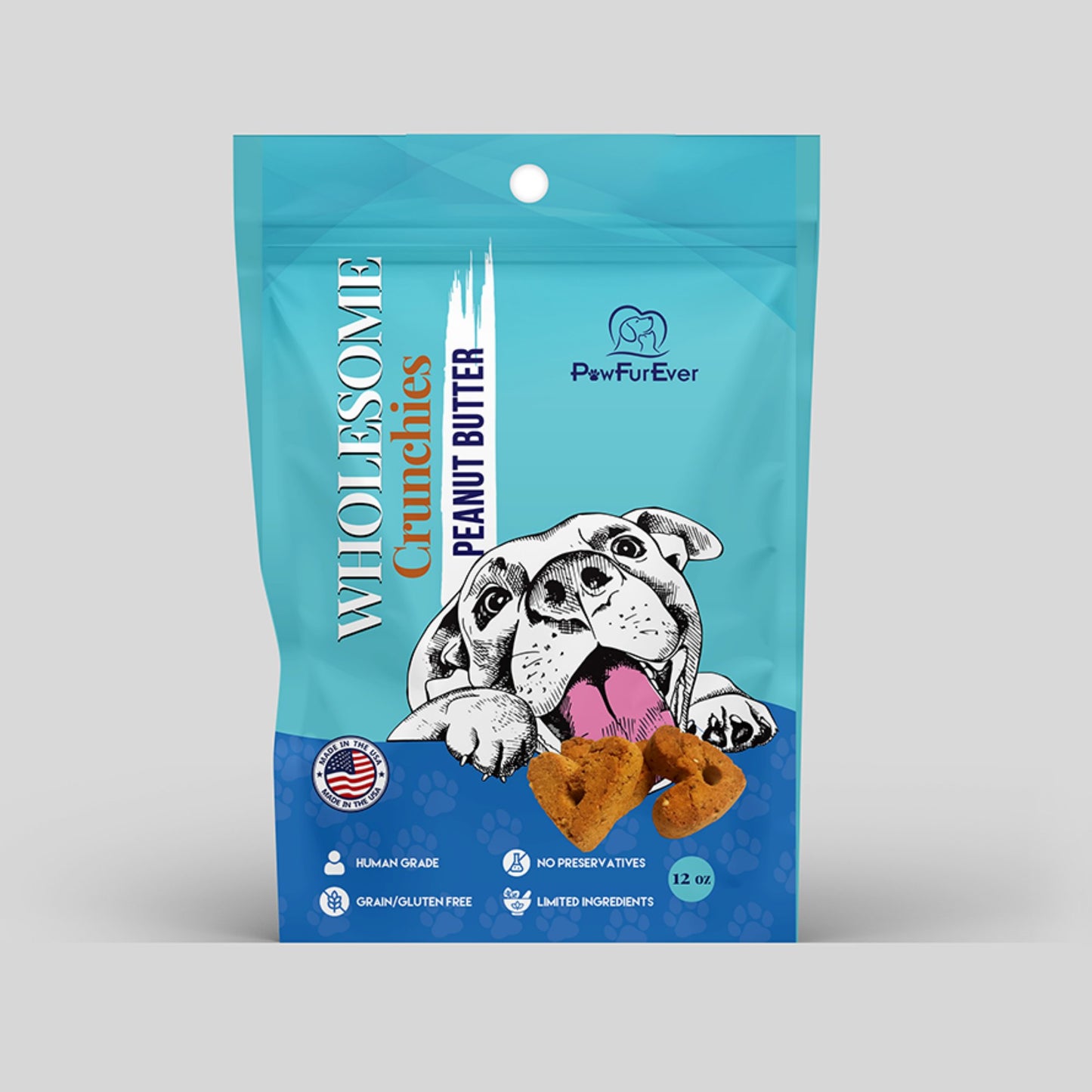
3-Ingredient Peanut Butter Dog Treats
Grain-free • all-natural • limited ingredients
A simple, grain-free peanut butter treat for small and large dogs. Check the product page for the full ingredient list before serving if your dog has allergies.
Shop Peanut Butter TreatsPrefer variety? The Cheese & Bacon + Peanut Butter Dog Treat Combo pairs both flavors. Only the peanut butter treat is grain-free, so review each ingredient list if your dog avoids grains.
Still deciding on treat style? See freeze-dried vs. baked dog treats, our picks for dogs with sensitive stomachs, and treats for picky dogs.
Peanut Butter Dog Treats FAQ
Is peanut butter safe for dogs?
Yes, plain peanut butter is safe for most dogs in small amounts. Choose a brand with no xylitol (also called birch sugar), ideally unsalted and unsweetened, and keep all treats under 10% of your dog's daily calories.
What kind of peanut butter can dogs eat?
Dogs can eat plain peanut butter made from peanuts only, or peanuts and a little salt. Avoid any jar that lists xylitol, birch sugar, chocolate, or added sweeteners, and skip sugar-free, keto, or high-protein spreads unless you've checked the label.
How much peanut butter can I give my dog a day?
As a general guide, about 1/2 teaspoon for a 5-lb dog, 1 teaspoon for a 10-lb dog, 2 teaspoons for a 20-lb dog, and about 1 1/4 tablespoons for a 50-lb dog, if peanut butter is the only treat that day. Ask your vet for an exact amount.
Can puppies have peanut butter?
Yes, once puppies are eating solid food, a tiny amount of xylitol-free peanut butter is generally fine. Keep it small so it doesn't replace their balanced puppy food.
Which peanut butter brands contain xylitol?
Brands reported to contain xylitol include Go Nuts Co., Hank's Protein Plus, Krush Nutrition, Nuts 'N More, and P28. Recipes change, so check the ingredient list of every jar, even brands you've bought before.
Are grain-free peanut butter dog treats better?
Grain-free peanut butter dog treats are a good choice for dogs with a vet-identified grain sensitivity. For most dogs they aren't automatically healthier, since the most common food allergens in dogs are proteins like beef, dairy, and chicken.
Can dogs be allergic to peanut butter?
It's uncommon, but it can happen. Watch for itching, red skin, ear irritation, vomiting, or diarrhea after a first taste, and stop feeding it and call your vet if you notice symptoms. Seek emergency care for facial swelling or trouble breathing.
Can peanut butter give dogs diarrhea?
Yes, too much peanut butter can cause an upset stomach or diarrhea because it's high in fat. Start with a small portion and increase slowly within your dog's treat budget.
How long do homemade peanut butter dog treats last?
Homemade peanut butter dog treats generally last 3 to 4 days at room temperature in an airtight container, up to 2 weeks in the refrigerator, and up to 3 months in the freezer.
What should I do if my dog ate peanut butter with xylitol?
Call your veterinarian, an emergency clinic, ASPCA Animal Poison Control at (888) 426-4435, or Pet Poison Helpline at (855) 764-7661 right away, even if your dog seems fine. Keep the jar handy so the vet can estimate the dose.
Key takeaways
- Plain, xylitol-free peanut butter is a safe, high-value treat for most dogs.
- Check every label for xylitol and birch sugar, every time.
- Keep peanut butter dog treats within 10% of daily calories; use the weight table above as your guide.
- Grain-free treats help dogs with grain sensitivities, but they aren't lower in calories or automatically allergy-friendly.
- If xylitol is ever eaten, call your vet or poison control immediately.
Treat time is one of the simplest ways to show your dog some love. Keep it safe, keep it simple, and make every reward count.
Shop PawFurEver Treats
RELATED POSTS


