


Silent Dog Tags: How to Stop Dog Tags From Jingling

Love your dog, not the 2 a.m. jingle? Here is how to quiet a noisy collar, when silent dog tags make sense, and how to keep your pet's ID easy to read the whole time.
In this guide
It is 2 a.m. Your dog scratches one ear, and the whole house hears it: clink, clink, jingle. Then comes the water bowl, then the stairs, then the full-body shake.
If you adore your dog but not the soundtrack, you are in good company. The fix does not mean taking off your dog's ID. You can stop dog tags from jingling in about ten minutes, often with things you already own.
And if you want the clink gone for good, silent dog tags remove the noise at the source. Below, we break down why tags jingle, which fixes actually work, the trade-offs most guides skip, and how to keep your pet safety setup readable while the house gets quieter.
Quick answer: To stop dog tags from jingling, first reduce how many tags hang from the collar, then cushion or contain the ones that stay. Combine contact info onto one tag, add a silicone silencer to each metal tag or use a tag pouch, and keep tags off the leash D-ring. For a fully quiet collar, switch to silent dog tags such as slide-on, rivet-on, or silicone styles. Always keep your phone number readable and any required rabies or license tag on the collar.
Why Do Dog Tags Jingle?
Tag noise is simple physics: hard metal hitting hard metal. Every step, scratch, and shake makes hanging tags swing on their split ring and strike each other, the collar's D-ring, and the leash clip.
Stainless steel, aluminum, and brass are stiff materials, so each tap rings like a tiny bell. A single tag on its own makes a soft tick. Three or four tags crowded on one ring make a full wind chime.
The four noise multipliers
- Number of tags. Every extra tag adds more contact points. An ID tag, rabies tag, city license, and microchip registry tag together can sound four times busier than one tag.
- Shared hardware. Tags on the same D-ring as the leash clip hit metal hardware on every stride.
- Loose collar fit. A collar that slides low on the neck lets tags swing farther and land harder.
- Bowls and floors. A stainless steel water bowl acts like a drum. Tags tapping its rim are often the loudest sound of the day.
Why some dogs sound louder than others
Two dogs with the same collar can sound completely different. Enthusiastic ear scratchers, sloppy drinkers, bouncy walkers, and dogs who shake off after every nap all create more tag movement than a calm couch companion.
Does Dog Tag Jingling Bother Your Dog?
Dogs hear a much wider range than people do. Most sources put canine hearing at roughly 67 to 45,000 Hz, compared with about 20 to 20,000 Hz for humans, and the American Kennel Club notes dogs pick up high, quiet sounds we miss. A bright metallic clink sits right in the range dogs hear well, and the tag sits a few inches from their ears.
Here is the honest part: there is very little published research on whether everyday tag noise affects dogs. Many dogs never seem to notice it. Others, especially noise-sensitive, anxious, or senior dogs, may startle at sudden clanks or start avoiding a metal bowl.
Signs the jingle might be bothering your dog
- Flinching or backing away when tags hit the water bowl
- Drinking less from a metal bowl than from a ceramic one
- Extra scratching or pawing at the collar area
- Restlessness at night that settles when the collar comes off
If you see these, quieting the tags is an easy experiment. If restlessness or scratching continues, check in with your veterinarian, since skin, ear, or anxiety issues can look similar.
When a quiet collar matters most
- Light sleepers and new babies. Night scratching sessions are the number one complaint about tag noise.
- Apartments and shared walls. Hard floors and close neighbors amplify every clink.
- Work-from-home pet parents. A jingling collar shows up on every call.
- Hunting, therapy, and working dogs. Noise can distract the dog, the people around them, or wildlife.
- Noise-sensitive or senior dogs. A calmer collar is one less thing to react to.
The 5-Step Quiet Collar Plan
Most guides throw a list of products at you. We prefer a sequence that starts free and only escalates when you need it. Many pet parents are happy by Step 3.
Step 1: Count every tag on the collar
Take the collar off and lay everything out. Common culprits include an ID tag, a current rabies tag, an expired rabies tag nobody removed, a city or county license, a microchip registry tag, and a decorative charm.
Sort them into three piles: required, useful, and leftover. Expired tags and duplicate charms go straight to the junk drawer. That alone often cuts the noise in half.
Step 2: Combine what you can onto one tag
One well-planned ID tag can replace several. A personalized engraved tag with room for a name on the front and contact details on the back usually covers everything a finder needs.
What to fit on a one-tag setup
- Your pet's name (front)
- Your mobile number, plus a backup number if space allows
- A short note such as "Microchipped" or "Needs meds"
- Your city, if you have room
Want more room than an engraved back allows? A QR code dog tag links to a contact profile that can hold extra phone numbers, vet details, and medical notes. That can replace separate medical or info tags, and it helps a finder reach you with a quick phone-camera scan.
Keep in mind: many U.S. states, counties, and cities require a current rabies or license tag on the collar. Combining your ID does not replace those, so check local rules before you remove one.
Step 3: Cushion the tags that stay
A dog tag silencer is a flexible silicone or rubber ring that wraps the edge of a metal tag. It stops metal-on-metal contact while leaving the face of the tag visible.
- Match the shape and size. Silencers come in round, bone, and other shapes. Measure your tag first. For reference, PawFurEver Circle tags are 30 mm across and Bone tags are 38 x 25 mm.
- Silence every metal tag. One bare tag next to a silenced one still clinks.
- Check monthly. Silencers stretch and loosen over time, and a loose one can slip off.
Step 4: Contain or separate the tags
If you still have two or more tags, give them less room to swing.
- Tag pouch. A small fabric or neoprene sleeve that closes around the whole stack. It is close to silent. Choose one with a clear window or label it "ID inside" so a finder knows to look.
- Tag clip or holder. A small clip that holds tags flat together so they move as one piece instead of knocking against each other.
- Move the leash. If your dog wears a harness, clip the leash there. Tags on the collar stop hitting the leash clip on every step.
Step 5: Convert to silent dog tags
When you want zero jingle, swap hanging tags for ones that do not dangle. Slide-on tags, rivet-on plates, silicone tags, and embroidered collars all live in this category. We cover each one, with honest pros and cons, below.
12 Ways to Stop Dog Tags From Jingling, Compared
Use this table to pick the fix that matches your dog, your budget, and how quiet you need things to be.
| Method | Noise reduction | Effort and cost | ID stays readable? | Best for |
|---|---|---|---|---|
| Remove extra or expired tags | High | Free | Yes | Every dog, start here |
| Combine info onto one tag | High | Low | Yes | Dogs wearing 2 or more tags |
| Silicone tag silencer | High | Low | Yes, edge only covered | Hanging metal tags |
| Tag pouch | Very high | Low | Finder must open it | Multiple tags, quiet nights |
| Tag clip or holder | Medium | Low | Yes | 2 to 4 tags |
| Leash on a harness | Medium | Free if you own one | Yes | Walk-time noise |
| Clear tape wrap (DIY) | Medium, short term | Free | Yes, if clear | Testing before buying |
| Felt bumper on tag back (DIY) | Low | Free | Yes | One tag tapping the D-ring |
| Slide-on silent tag | Silent | Moderate | Yes | Flat collars of matching width |
| Rivet-on plate or nameplate collar | Silent | Moderate to high | Yes | One permanent everyday collar |
| Silicone silent tag | Near silent | Low to moderate | Yes, can wear over time | Light dogs, non-chewers |
| Collar off indoors | Silent | Free | No ID while off | Supervised home time only |
What Are Silent Dog Tags?
Silent dog tags are pet ID tags designed not to dangle or clink. Instead of hanging from a split ring, they sit flat against the collar, or they are made from soft materials like silicone that do not ring when they touch metal.
Each style solves the noise problem differently, and each comes with its own trade-offs.
Slide-on dog tags
A slide-on tag has slots on the back that the collar threads through, so it lies flat. No swinging means no jingle.
- Pros: silent, flat, easy to read, nothing to snag.
- Cons: the slot must match your collar's width, and moving it to another collar means unbuckling and rethreading.
- Tip: measure your collar before ordering. A 3/4 inch slot on a 1 inch collar will not fit, and a 1 inch slot on a 5/8 inch collar will slide around.
Rivet-on tags and nameplate collars
These plates are fastened directly to the collar with rivets or screws. They are the most permanent silent option.
- Pros: completely silent and very hard to lose.
- Cons: the ID lives on one collar only, and updating a phone number usually means a new plate or collar.
Silicone silent tags
Silicone tags are soft, flexible, and quiet. They hang like a normal tag but do not clink.
- Pros: light, quiet, colorful, and easy on small dogs.
- Cons: soft material can be chewed by puppies or a doggy roommate, and how well the text holds up depends on how deeply it is engraved or molded.
Embroidered or printed collars
Some collars carry the dog's name and phone number stitched or printed right on the strap. They are silent, but the info is often small, it can fade or fray, and it only works while your dog wears that one collar.
Acrylic and plastic tags
Lighter materials make a duller sound than metal. They are quieter, not silent, and still tap against the D-ring.
Silent Dog Tags vs. Hanging Metal Tags: The Honest Trade-Offs
Full transparency: PawFurEver makes hanging stainless steel and aluminum tags, not silent tags. So here is how we would decide if we were in your shoes, including where a silent tag is the better call.
| Factor | Silent tag (slide-on, silicone) | One metal tag plus silencer |
|---|---|---|
| Noise | Silent or near silent | Quiet, not zero |
| Long-term readability | Varies by material and depth of text | Deep laser engraving on stainless steel stays legible for years |
| Room for info | Usually limited to a strip or slot | Front plus back, or a QR back that links to a full profile |
| Moves between collars | Slide-on: rethreading needed | Easy, clips onto any D-ring |
| Collar compatibility | Must match collar width | Works on any collar with a D-ring |
| Chew resistance | Silicone is softer | Metal resists chewing; silencer may need replacing |
| Style and personalization | Fewer shapes and designs | Many shapes, finishes, designs, and photo options |
Choose silent dog tags if
- Your dog wears one everyday collar and you rarely swap it
- Even a quiet tick bothers you or your dog
- Your dog works, hunts, or visits places where silence matters
Choose one metal tag with a silencer if
- You switch between collars, harnesses, or seasonal styles
- You want more contact info, or a QR profile, than a slide-on strip can hold
- You want a personalized design, finish, or photo that reflects your pet
- Your dog is a chewer and you want a tougher tag body
Quiet, But Still Findable: Do Not Silence Your Dog's Safety
The goal is a quieter collar, not a collar without ID. Visible tags still matter a lot.
In a national ASPCA survey published in 2012, 93% of lost dogs were recovered. About half were found by searching the neighborhood, and 15% came home because of an ID tag or microchip. The full results appear in the peer-reviewed study in Animals.
More recent reunification research from the American Animal Welfare Alliance, drawing on a DocuPet survey, found 77% of dog owners named ID tags as the first tool used to reunite with a lost dog. When a neighbor finds your dog, the tag is usually how they reach you.
Your quiet-collar safety checklist
- Your phone number is readable without tools, scissors, or guesswork
- Tape or covers never hide the engraving
- Pouches are labeled or windowed so a finder knows ID is inside
- Any required rabies or license tag stays on the collar
- Your pet's microchip registration lists your current number
- Tags, silencers, and split rings get a quick check once a month
DIY Dog Tag Silencer Ideas (and What to Watch For)
Want to test whether quieter tags make a difference before you buy anything? These at-home fixes work in a pinch.
- Clear tape sandwich. Fold clear packing tape around each tag, two or three layers thick. Quick and free, but it peels, collects grime, and needs replacing often.
- Rubber band or hair tie. Wrap it around the tag stack so tags move together. Swap it as soon as it looks worn.
- Felt bumper. Stick a small furniture felt pad on the back of a single tag to soften taps against the D-ring.
- Stack and clip. Use a small binder-style clip or key ring clip to hold tags flat together.
Safety note: anything that can come off can be chewed or swallowed. Skip DIY fixes for puppies and enthusiastic chewers, and check them weekly for everyone else.
7 Mistakes That Make Dog Tags Louder
- Hanging tags on the leash D-ring. The clip becomes a built-in clapper.
- Leaving the collar too loose. Aim for two fingers of room between collar and neck, measured snug against the skin.
- Keeping expired tags. Old rabies and license tags add noise and confusion.
- Stacking split rings. A chain of rings gives tags even more room to swing.
- Using the wrong size silencer. A loose silencer rattles and falls off; a tight one can pop off the tag edge.
- Charm overload. Decorative charms are cute, but each one is another clapper.
- Ignoring the bowl. A ceramic bowl or a silicone mat under a metal one cuts the loudest daily clang.
Three Example Quiet Collar Setups
These are example setups built around common situations we hear about, not individual customer stories. Use them as templates.
The apartment senior with four tags
A 10-year-old Lab in a third-floor apartment wears an ID tag, a rabies tag, a city license, and an old rabies tag. Remove the expired tag, combine ID and microchip info onto one tag, silence the remaining three, and slip them into a windowed pouch for overnight. Result: near silent, still fully identifiable.
The puppy who chews everything
An eight-month-old shepherd mix chews anything soft. Skip DIY tape and rubber bands. Use one stainless steel ID tag with a well-fitted silicone silencer, check it weekly, and keep the rabies tag as the only second tag. Result: quieter, and nothing small and loose to swallow.
The water-loving adventurer
A retriever who swims most weekends wears a fabric collar that stays soggy and a pouch that never dries. Switch to a waterproof biothane collar that wipes clean, pair it with a single engraved tag and a silicone silencer, and skip fabric pouches near water. Result: quiet tags and a collar that does not trap odor.
Our Picks for a Quieter, Safer Collar
The quietest hanging setup is one tag that does the work of several. These pieces make that easy, and every tag pairs well with a shape-matched silicone silencer.
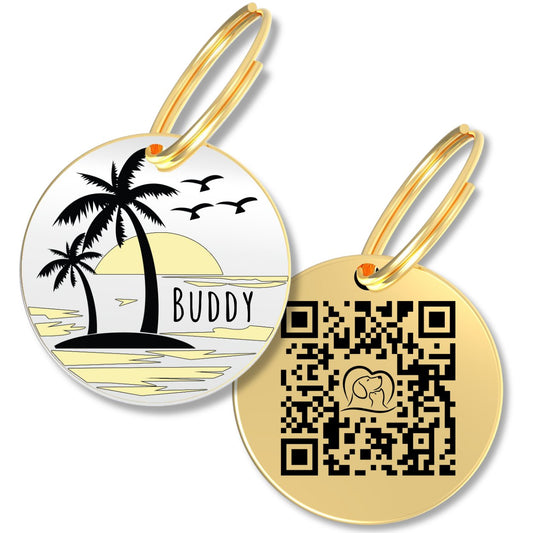
QR Code Dog Tags
One tag, many contacts. Solid stainless steel with 3-tone laser engraving on the front and a laser-etched QR code on the back that opens your pet's contact profile with any smartphone camera, no app needed. A 30 mm circle that fits standard round silencers.
Shop QR Code Tags
Engraved Dog Tags
Solid stainless steel with deep laser engraving made to stay legible for years. Your pet's name and design on the front, and up to 80 engraved characters or a QR code on the back. Four shapes and four finishes, including Black.
Shop Engraved Tags
Waterproof Biothane Dog Collars
Wipe-clean biothane that does not absorb water or trap odor, with solid brass and nickel-plated hardware. Cut and assembled by our team in Maryland, made in the USA. Four sizes and seven colorways, ready for one quiet tag.
Shop Waterproof CollarsPrefer a design with more personality? Breed dog tags, birth flower dog tags, and photo dog tags all hang from the same 20 mm split ring, so the same one-tag, one-silencer approach works.
Frequently Asked Questions
What are silent dog tags?
Silent dog tags are ID tags designed not to jingle. Slide-on and rivet-on tags sit flat against the collar so they cannot swing, while silicone tags hang normally but are made of a soft material that does not ring when it touches metal.
Do silent dog tags really work?
Yes. Slide-on and rivet-on tags are fully silent because nothing moves. Silicone tags are near silent, with a soft tap at most. The trade-offs are less room for information, collar width matching for slide-ons, and varying long-term durability depending on the material.
How do I stop my dog's tags from jingling without buying anything?
Remove expired or duplicate tags, tighten the collar to a two-finger fit, clip the leash to a harness instead of the collar, and wrap remaining tags in clear tape or hold them together with a rubber band. Check DIY fixes weekly and skip them for chewers.
Is dog tag jingling bad for my dog's ears?
There is little research showing everyday tag noise harms a dog's hearing, and many dogs ignore it. Dogs do hear high-pitched sounds well, though, so noise-sensitive, anxious, or senior dogs may find constant clinking bothersome. Watch for flinching or bowl avoidance.
Does a dog tag silencer make the tag harder to read?
A good silicone silencer only covers the outer edge, so the engraving stays visible. Pouches do hide the tag, so pick one with a clear window or a visible "ID inside" label so a finder knows to look.
Are silicone dog tags durable?
They are flexible and resist cracking, but soft materials can be chewed, and text depth varies by brand. If your dog chews or plays rough with other dogs, a stainless steel tag with deep laser engraving and a silencer is often the longer-lasting choice.
Can a QR code tag replace multiple tags?
It can replace extra ID, contact, and medical info tags, because the profile holds several phone numbers and notes. It does not replace a rabies or license tag that local rules require. A QR tag helps a finder reach you; it is not a GPS or live tracking device.
Does my dog have to wear a rabies tag?
Requirements vary by state, county, and city. Many U.S. localities require a current rabies or license tag on the collar, so check with your local animal services office or veterinarian before removing it to cut noise.
Should my dog wear tags at home or at night?
Dogs can slip out an open door at any time, so many pet parents keep ID on around the clock and use silencers or a pouch for quiet nights. If you do take the collar off indoors, put it back on before anyone opens a door or heads outside.
What size silencer do I need for my tag?
Measure the tag across its widest point and match the shape. For example, PawFurEver Circle tags are 30 mm across, Bone tags are 38 x 25 mm, Hexagon tags are 33 mm across, and Diamond tags are 37 mm point to point.
Do slide-on tags fit every collar?
No. The slots must match the collar's width and thickness. Measure your collar strap before ordering, and note that slide-on tags do not attach to rolled, round, or very thick collars.
The short version: Count your tags, cut the extras, combine contact info onto one tag, then cushion or contain what stays. Go fully silent with slide-on, rivet-on, or silicone tags if you need zero noise. Whatever you pick, keep your number readable, keep required tags on, and check the setup monthly.
A Quieter Collar Without Giving Up Peace of Mind
You should not have to choose between a calm house and a dog who can find their way home. Start with the free fixes, trim the collar down to one hard-working tag, and add a silencer. If that is still too much clink, silent dog tags finish the job.
Either way, the tag that matters most is the one a neighbor can read in five seconds. Make it clear, make it current, and make it yours.
Ready for a one-tag setup? Personalize a durable stainless steel tag with your pet's name, your number, or a QR profile. Personalized and shipped from Maryland in 2 business days.
Build Your One-Tag SetupRELATED POSTS


