


The History of Dog Tags: From Military ID to Pet Tags

From Roman lead discs and Civil War coins to laser-engraved stainless steel and scannable QR backs, here is the full story of how dog tags went from the battlefield to your pet's collar, and what that history teaches every pet parent today.

In this guide
Here is a twist most articles on the history of dog tags miss: in America, dogs wore official ID tags before soldiers did. City dog licenses and collar tags were already common in the 1800s, long before the U.S. Army made ID tags mandatory. Soldiers borrowed the idea, and the nickname followed them home.
That little circle of metal jingling on your dog's collar carries more than 150 years of hard lessons about identity, loss, and getting loved ones home. The details changed a lot along the way: materials, shapes, stamping machines, even what information belongs on the tag.
In this guide, we walk through the full evolution of dog tags, bust a few myths, and turn it all into a practical checklist for your own pet's ID. As a team that personalizes pet ID tags every day and ships them from Maryland, we care a lot about the part of the story that is still being written.
Quick answer: The history of dog tags runs on two tracks. Pet ID tags grew out of 19th-century dog licensing laws, when owners hung metal tags with a name and license number on collars. Military ID tags started as homemade Civil War markers, became official U.S. Army issue in December 1906, doubled to two tags in 1916, and picked up the "dog tag" nickname by the 1930s. Today, pet tags have evolved into laser-engraved stainless steel, printed photo tags, and QR-enabled tags that help a finder reach you.
The History of Dog Tags at a Glance: A Timeline
If you only have a minute, this table covers the milestones that shaped both military and pet dog tags.
| Era | Milestone | Who wore it |
|---|---|---|
| Ancient Rome | Legionnaires carry the signaculum, a lead disc with name and legion | Soldiers |
| 1800s | Cities pass dog licensing rules; collar tags carry the owner's name and license number | Dogs |
| 1861 to 1865 | Civil War soldiers make their own ID from paper, wood, coins, and pins | Soldiers |
| 1888 to 1897 | Owney the postal dog collects hundreds of tags riding the mail trains | One famous dog |
| Dec 1906 | U.S. Army General Order No. 204 requires an aluminum ID disc | Soldiers |
| July 1916 | A second tag is added: one stays with the body, one goes to records | Soldiers |
| 1917 | The Navy requires ID tags; all U.S. combat troops wear them in WWI | Soldiers and sailors |
| 1936 | William Randolph Hearst popularizes the phrase "dog tags" | Everyone, as a nickname |
| 1940 | Machine-stamped, notched, rounded rectangle tags arrive | Soldiers |
| 1969 | The Army begins moving from serial numbers to Social Security numbers | Soldiers |
| 1980s to 2000s | Microchips join collar tags as a second layer of pet ID | Pets |
| 2015 | DoD ID numbers replace Social Security numbers on Army tags | Soldiers |
| Today | Laser-engraved steel, printed photo tags, and QR scan-to-contact tags | Pets |
Before the Name: The Ancient Roots of ID Tags
The urge to label who we are, and who we love, is ancient. Roman legionnaires wore a thin lead disc called a signaculum in a pouch around the neck, marked with the soldier's name and legion. Historians often call it the first recorded ancestor of the military dog tag.
Dogs were part of the picture too. Mosaics and paintings from Pompeii show dogs wearing collars, some decorated with metal. We cannot prove those pups wore name tags, but a collar with a metal plate is a very short step away.
Pet Tags Came First: Dog Licensing in the 1800s
In the United States, the modern pet tag grew out of local law rather than love alone. As towns grew, cities began requiring dog owners to register their dogs, pay a fee, and hang a metal license tag on the collar.
The Minneapolis Morning Tribune, for example, printed a stern public "Dog Notice" from the city clerk in 1878. Museum collections of early 20th-century license tags tell the same story: by the late 1800s, owners were attaching tags with the dog's name and contact details, and later the city license became a metal tag of its own.
Those early tags were simple stamped metal, a far cry from today's designs. Still, they set the pattern every pet ID tag follows now: a small, durable piece of metal that tells a stranger who this dog belongs to.
Owney: The Dog Who Wore Over a Thousand Tags
No story shows the charm of dog tags better than Owney, a scruffy terrier mix who wandered into the Albany, New York, post office around 1888. Railway Mail Service clerks adopted him as their good-luck mascot, and he began riding mail trains across the country.
At each stop, postal workers added a tag or medal to his collar to mark the visit. He collected so many that Postmaster General John Wanamaker gave him a special harness to carry them all. Accounts credit him with more than a thousand tags, medals, and tokens over his travels.
One of our favorites has a hometown connection: Owney received a specially designed token at the National Association of Post Office Clerks convention in Baltimore, Maryland, dated April 19, 1892. Today, Owney and hundreds of his tags are on display at the Smithsonian's National Postal Museum in Washington, D.C.
The Civil War: When Soldiers Made Their Own Tags
On the military side, the story begins with fear and ingenuity. During the Civil War, there was no official system for identifying the fallen, and soldiers dreaded dying unknown and far from home.
So they improvised. Before the Battle of Mine Run in Virginia in 1863, some of General George Meade's troops wrote their names and units on paper tags and pinned them to their uniforms. Others:
- Carved names into small wooden discs and wore them on a string
- Ground one side of a coin smooth and scratched their name into it
- Bought engraved "soldier's pins" advertised in magazines like Harper's Weekly
- Stenciled names onto knapsacks or scratched them into belt buckles
These efforts were personal and uneven, and the cost was enormous. At Vicksburg National Cemetery alone, roughly 13,000 of the 17,000 Civil War soldiers buried there remain unidentified.
1906 to 1917: Military ID Tags Become Official
It took decades of debate, but the U.S. Army finally acted. War Department General Order No. 204, dated December 20, 1906, required an aluminum identification tag about the size of a silver half dollar.
Each disc was stamped with the soldier's name, rank, company, and regiment or corps. It hung from the neck on a cord or thong, worn under the uniform whenever the field kit was worn.
Why Soldiers Started Wearing Two Tags
In July 1916, the order was updated to require a second disc hung from the first by a short string or chain. The logic was practical and sobering: one tag stayed with the body, and the second was collected for burial and record keeping.
The Navy followed in May 1917. By the time America entered World War I, all U.S. combat troops wore ID tags, which now included an Army-issued serial number. Navy tags took a different route: oval discs of monel (a nickel-copper alloy), acid-etched rather than stamped, and even etched with the sailor's fingerprint.
World War II and the Famous Notch Myth
When millions of Americans entered the military in the early 1940s, hand stamping and acid etching could not keep up. In 1940, the Army introduced the machine-stamped, rounded rectangle tag that most people picture today.
These tags carried key details such as the soldier's name, serial number, blood type, and religious preference. They also had a small notch on one end, which sparked one of the most repeated myths in military history.
Myth vs. Fact: What Was the Notch For?
- The myth: the notch was meant to be wedged between a fallen soldier's teeth.
- The fact: the notch simply held the blank in place inside the stamping machine while the letters were pressed in.
Once those machines were replaced by the 1970s, the notch disappeared. Military tags issued today are smooth on both ends.
Why Are They Called Dog Tags?
There are three popular explanations, and the truth likely blends them:
- The Hearst theory. According to the Army Historical Foundation, newspaper publisher William Randolph Hearst used the term in 1936 to attack the new Social Security Administration, which was rumored to be considering metal ID nameplates. He called them "dog tags" to suggest workers would be treated like dogs.
- The draftee joke. Many World War II draftees said they got the name because they felt treated like dogs.
- The collar resemblance. The tags simply looked like the license tags already jingling on dog collars back home.
That third theory is our favorite, and it has real history behind it. Pet license tags were familiar to nearly every American household decades before WWII, so the comparison came naturally to the soldiers wearing them.
Vietnam to Today: The Modern Military Dog Tag
The information on military tags kept changing to match the times. By 1969, the Army began transitioning from service numbers to Social Security numbers. Regulations also went back and forth on whether both tags should stay with a fallen service member, settling on the original one-stays, one-goes practice by Vietnam.
In 2015, the Army began replacing Social Security numbers with Defense Department ID numbers to protect service members from identity theft. Even with DNA identification available, dog tags are still issued today, and they remain one of the most meaningful symbols of service and sacrifice in American life.
Civilians adopted the look too. Tags became medical alert IDs, fashion accessories, and keepsakes engraved with names, dates, and quotes. The shape now means something far beyond the battlefield.
How Pet ID Tags Evolved: From Stamped Brass to QR Codes
While military tags standardized, pet ID tags quietly went through their own evolution. The goal never changed: help anyone who finds a wandering pet reach the family fast. What changed was how clearly, how durably, and how personally a tag could do that job.
Stamped Tags: The Classic Starting Point
For most of the 20th century, pet tags were stamped or embossed brass and aluminum. They were affordable and familiar, but soft metals scratch, and raised lettering can wear smooth after years of rubbing against a collar, bowls, and other tags.
Engraved Stainless Steel: Made to Stay Legible
Modern laser engraving changed the game. Instead of pressing letters into soft metal, a laser etches them into the surface. On solid stainless steel, deep laser engraving is made to stay legible for years, which is exactly what you want from something your dog wears through mud, rain, and zoomies.
Printed Photo Tags: Personality Meets Practicality
Full-color printing on lightweight aluminum let pet parents add something no stamped tag could carry: their pet's face. A photo tag helps a finder confirm they have the right dog, and it doubles as a sweet reflection of your pet's personality.
Microchips: A Second Layer, Not a Replacement
Implantable microchips joined the pet ID toolkit in the late 20th century. They are permanent, but a finder cannot read one without a scanner at a vet or shelter. A tag, by contrast, works the moment someone kneels down and reads it.
The two work best together. An often-cited study of more than 7,700 stray animals in shelters found that microchipped dogs were returned to their owners 52.2% of the time, compared with 21.9% for dogs without chips. The same research found the main reason chipped pets were not returned was missing or outdated owner information in the registry.
QR Code Tags: Scan-to-Contact Safety
The newest chapter is the QR code tag. A finder scans the code with any smartphone camera, no app needed, and a pet profile opens with your contact details and anything else you choose to share. Because the profile lives online, you can update a phone number without replacing the tag.
One important note: a QR tag is a scan-to-contact tool, not GPS or live tracking. It helps a finder reach you once your pet has been found, which is where most happy reunions start.
Why This History Still Matters for Your Pet
Soldiers learned the hard way that identification only works when it is worn, readable, and current. The same three lessons apply to pets, and the numbers back it up.
In the ASPCA's national lost pet survey, about 14% of dog households reported losing a dog in the previous five years. Most dogs made it home, and 15% were recovered specifically because they wore an ID tag or had a microchip. Only 6% were found at a shelter, which means the neighbors and strangers who find a dog first are the ones who most need a readable tag.
Here is a simple framework we use, borrowed straight from military tradition:
- Worn: a tag in a drawer does nothing. Keep it on the collar every day, including walks, car rides, and trips to the groomer.
- Readable: choose deep engraving or a clear print, and replace any tag that has faded, scratched, or bent.
- Current: update your number the day it changes, on the tag, the microchip registry, and any QR profile.
Military Dog Tags vs. Pet ID Tags vs. Microchips vs. QR Tags
Each form of ID was built for a different job. Here is how they compare side by side.
| Feature | Military dog tag | Engraved pet ID tag | Microchip | QR code pet tag |
|---|---|---|---|---|
| Main purpose | Identify service members | Help a finder call you | Permanent ID at vets and shelters | Help a finder reach you by scan |
| Who can read it | Anyone | Anyone, instantly | Only someone with a scanner | Anyone with a smartphone |
| Typical info | Name, DoD ID, blood type, religion | Pet name, phone, short note | ID number linked to a registry | Full profile you can edit |
| Can it fall off? | Rarely, worn on a chain | Only if the collar comes off | No | Only if the collar comes off |
| Easy to update? | Reissued | Replace the tag | Update the registry | Edit online any time |
| Style and personality | Standard issue | Many designs and finishes | None, it is invisible | Themed front designs |
The takeaway: the strongest setup layers a readable collar tag with a registered microchip, and adds a QR back if you want the flexibility of an editable profile.
What to Put on a Modern Pet ID Tag
Military tags carry only what matters most in an emergency. Your pet's tag should follow the same rule. Space is limited, so prioritize in this order:
- Your cell phone number. The single most important line. A finder can call or text you right away.
- Your pet's name. It helps a finder calm and connect with your pet. Some pet parents put the name on the front and contact details on the back.
- A second contact. A partner, family member, or trusted neighbor in case you cannot pick up.
- Key medical needs. Short notes like "Needs meds" or "Diabetic" prompt a finder to act quickly.
- "I'm microchipped." This nudges a finder toward a vet or shelter scan if they cannot reach you.
Skip your full home address if you prefer privacy; a phone number does the work. And check your local rules, because many U.S. cities and counties still require a rabies or license tag, the direct descendant of those 1800s licensing laws.
Example: Turning 80 Characters Into a Helpful Tag
Our engraved tags fit up to 80 characters on the back. Here is one way a pet parent might use that space:
- Line 1: Call Mom 410-555-0123
- Line 2: Alt 410-555-0456
- Line 3: Needs daily meds
- Line 4: I'm microchipped
That is under 70 characters, clear at a glance, and useful even if the finder never scans a thing. (The phone numbers above are placeholders, of course.)
Carrying the Tradition Forward: PawFurEver ID Tags
Every tag we make is a small nod to this history: durable materials, clear information, and a design that feels like your pet. Each one is personalized and shipped from Maryland in about 2 business days, with a 20 mm stainless steel split ring included.
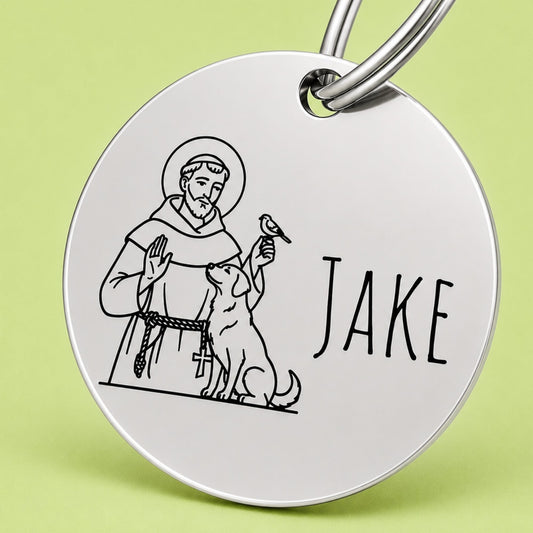
Engraved Dog Tags
From $22.99
Solid stainless steel with deep laser engraving, made to stay legible for years. Four shapes, four finishes including Black, and up to 80 characters or a QR code on the back.
Shop Engraved Tags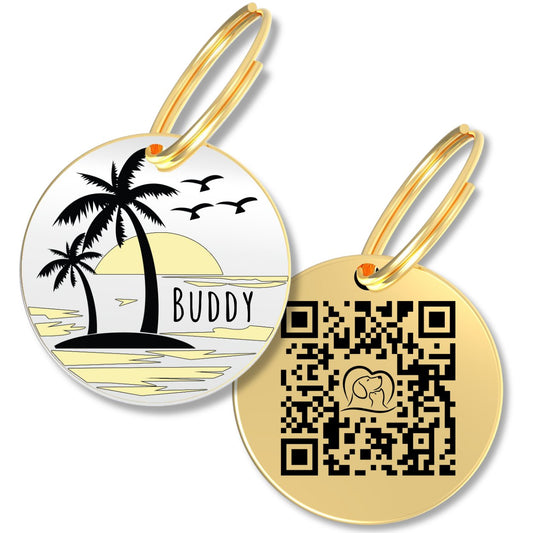
QR Code Dog Tags
From $22.99
A 30 mm stainless steel circle with 3-tone engraving on the front and a laser-etched QR code on the back. Any phone camera opens your pet's contact profile.
Shop QR Tags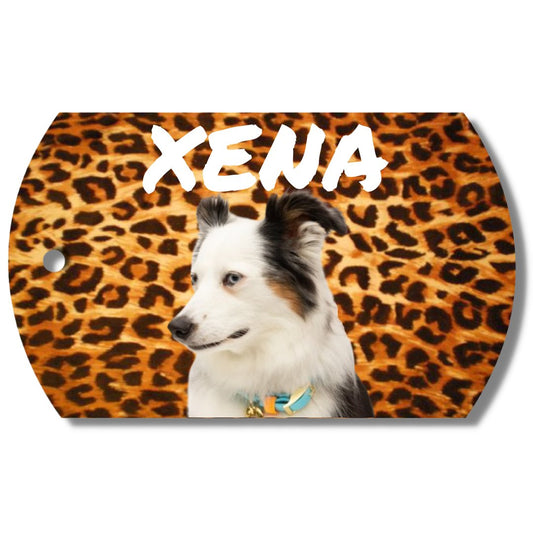
Photo Dog Tags
See product page for current pricing
Lightweight printed aluminum with your pet's photo and name on the front, and a QR code or up to 80 engraved characters on the back.
Shop Photo TagsLooking for something with a little more personality? Explore breed dog tags with a peek-a-boo breed portrait, birth flower dog tags for a birthday or gotcha day, or driver's license dog tags, a playful modern twist on the old city license tag.
Frequently Asked Questions About the History of Dog Tags
When were dog tags first used?
For pets, metal collar and license tags were common in U.S. cities by the late 1800s. For soldiers, homemade ID appeared during the Civil War, and the U.S. Army made an official aluminum ID tag required in December 1906.
Why are military ID tags called dog tags?
The most documented explanation credits William Randolph Hearst, who used the term in 1936 to criticize proposed Social Security ID plates. Other theories say draftees felt treated like dogs, or that the tags looked like the license tags on dog collars.
Why do soldiers wear two dog tags?
Since 1916, service members have worn two tags so one can stay with the fallen and the other can be collected for burial and personnel records.
What was the notch on old dog tags for?
The notch on World War II era tags held the blank in place inside the stamping machine. The popular story about placing it between a soldier's teeth is a myth. Notches disappeared when those machines were retired by the 1970s.
Did dogs or soldiers wear ID tags first?
In the United States, dogs did. City dog licensing and collar tags were already widespread in the 1800s, decades before military ID tags became official in 1906.
What information is on a military dog tag today?
Modern Army tags typically include the service member's name, DoD ID number, blood type, and religious preference. Social Security numbers were removed starting in 2015 to protect against identity theft.
Does my dog still need an ID tag if they are microchipped?
Yes. A microchip needs a scanner to read, while a tag can be read instantly by anyone who finds your pet. Using both, and keeping your details current, gives your pet two ways to get help.
What should I put on my dog's ID tag?
Start with your cell phone number, then your pet's name, a backup contact, any key medical need, and a note that your pet is microchipped. Keep it short and easy to read.
Is a QR code dog tag the same as a GPS tracker?
No. A QR code tag opens a contact profile when someone scans it with a phone camera. It helps a finder reach you, but it does not show your pet's live location.
The bottom line: Dog tags began as city license tags on collars and homemade Civil War markers, became official military ID in 1906, and earned their famous nickname by the 1930s. For pets, the tag has evolved from stamped brass to deep-engraved stainless steel, photo tags, and QR scan-to-contact backs. The lesson has not changed in 150 years: ID only helps when it is worn, readable, and current.
Sources and Further Reading
- USO: Dog Tag History, How This Military Tradition Got Its Start (originally published on Defense.gov)
- International Armed Forces and Veterans Museum: A Brief History of the Dog Tag
- Task & Purpose: A Brief History of the Dog Tag
- ASPCA: How Many Pets Are Lost? How Many Find Their Way Home?
- AVMA: Pet Owners, Shelters, and Clinics, Check the Chip
- Smithsonian's National Postal Museum: Owney the Dog
150 years of history, one simple job: help bring them home.
Give your pet a tag that is durable, clear, and made just for them.
RELATED POSTS


