


Best GPS Dog Collar: Keep Your Pet Safe and Track Their Adventures
Losing sight of your dog for even a minute is a special kind of panic. Whether your furry friend slipped out the door or bolted after a squirrel, those seconds feel endless.
That fear is why so many pet parents compare a GPS dog collar against a simple Apple AirTag. Both promise peace of mind, but only one is built to track a moving animal.
Below: how each option works, where an Apple AirTag on a collar falls short, and what pet owners should look for before buying anything for a dog's neck.
What Is a GPS Collar?
A GPS collar is an attachable device that uses satellite positioning to calculate a pet's exact coordinates and send them to an app on your phone.
Unlike a basic tag, GPS collars don't rely on someone else's phone to find your pet. They connect through satellites and a cellular network, so you can watch your pet's live movements on a digital map from anywhere.
Many GPS collars also monitor activity and health, tracking walking time, rest, and how much ground a dog covers. Battery life varies from 24 hours of heavy use to several weeks on a lighter setting, and most cellular models carry a subscription fee.
Can You Put an Apple AirTag on a Dog Collar?
Technically, yes. An Apple AirTag is small and lightweight, easy to snap into a case that clips onto a leash, harness, or collar, which is why "airtag dog collar" is such a popular search.
Apple has never marketed or endorsed the AirTag as a tracker for animals. It was designed to help iPhone users find keys and luggage, not a moving, curious dog.
How Do AirTags Work for a Dog?
Short answer: an AirTag has no GPS chip of its own. It uses Bluetooth to quietly ping nearby Apple devices through the Find My network.
When another iPhone passes close by, that phone relays your dog's location to your account. No nearby iPhone means no update, which is why AirTags work well in some places and go quiet in others.
Is It Safe to Put an AirTag on a Dog's Collar?
An Apple AirTag itself isn't dangerous to a dog. The bigger risk is a loose attachment: a case that isn't secure can fall off, get chewed, or slip loose during a swim, leaving a missing pet with no tracker at all.
Choose a snug, well-made AirTag holder, avoid dangling attachments that could catch on a fence, and notice how it fits after long walks or off-leash time.
GPS Collar vs. Apple AirTag: Side-by-Side Comparison
| Feature | GPS Collar | Apple AirTag |
|---|---|---|
| Tracking method | GPS satellite plus cellular | Bluetooth plus nearby iPhones |
| Real-time location | Yes, continuous | Only when an Apple device is near |
| Works in remote areas | Yes | No, needs a populated area |
| Battery life | 24 hours to several weeks | About one year, no charging |
| Ongoing cost | Usually a subscription | None after purchase |
| Works with Android | Yes | No, iOS only |
| Best for | Hikers, rural homes, escape artists | City dogs, short walks near home |
The Downsides of Using an AirTag on a Dog
An iPhone has to sit within Bluetooth range for an AirTag to update, so in a quiet suburb, on a farm, or a dark corner of a big house, tracking can go silent for hours.
A few other things to know before relying on one:
- AirTags are not fully weatherproof, only lightly water resistant
- There's no live GPS tracker inside, only an occasional Bluetooth ping
- Lost mode sends a notification, but only after someone else's phone finds it
- Friends on Android can't help relay a signal at all
- A dog behind a house or in tall grass can vanish from Bluetooth range fast
None of this makes an AirTag useless in a busy city with plenty of iPhones. It's just not a substitute for real-time tracking if your dog tends to roam.
Choosing an AirTag Holder for a Dog Collar
If you try one anyway, the case matters as much as the AirTag itself. Look for one built to hang securely on a collar, made from durable, water resistant leather or reinforced silicone, not thin plastic that cracks after one swim.
Leather collars with a built-in pocket for an AirTag are a popular choice among pet owners who want a classic look with a hidden spot to secure a tracker. Personally, I'd test the fit for a full week before a longer hike.
Is a GPS Collar Worth It?
Quick answer: Yes, if your pet spends real time outdoors, escapes occasionally, or lives somewhere with weak cell coverage. A GPS collar gives continuous tracking that doesn't depend on other people's phones, works for dogs and cats, and adds health monitoring an Apple device can't offer. If your dog rarely leaves a small, populated area, a cheaper Apple AirTag and case may be enough for now.
What Reviews and Pricing Actually Show
Reviewers who test trackers for weeks tend to agree: GPS collars win on accuracy, while an AirTag wins on price and battery life.
A few numbers to know before you purchase anything:
- Most GPS collars add a monthly fee to the purchase price
- An Apple AirTag is a one-time purchase with no ongoing company fee
- Radio-frequency collars skip subscriptions, trading some range for savings
- Reviews note GPS models hold a charge for days, while an AirTag can eventually run close to a year
Assuming your dog is a homebody, an AirTag's lower price may make sense. Assuming they hike or roam, a GPS tracker tends to save more stress than it costs.
Beyond Tracking: Keeping a Pet Safe if They Go Missing
A tracker is only one layer of protection. Fortunately, a few simple habits go a long way toward bringing a lost dog home fast, and support a good outcome even when a device fails.
- Keep an engraved ID tag on the collar, with a current phone number
- Ask your vet to confirm a pet's microchip details are current at every visit
- Save a recent photo and description of your dog on your phone
- Double-check that collars, harnesses, and leashes are secure before every walk
A sturdy, personalized collar and tag combination is often the first thing a person checks when they discover a missing dog, long before anyone opens an app. For example, a neighbor who spots a loose dog will usually call the number on the tag first.

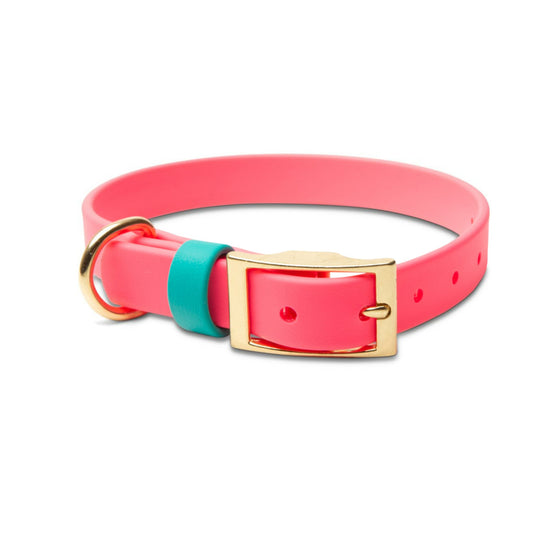
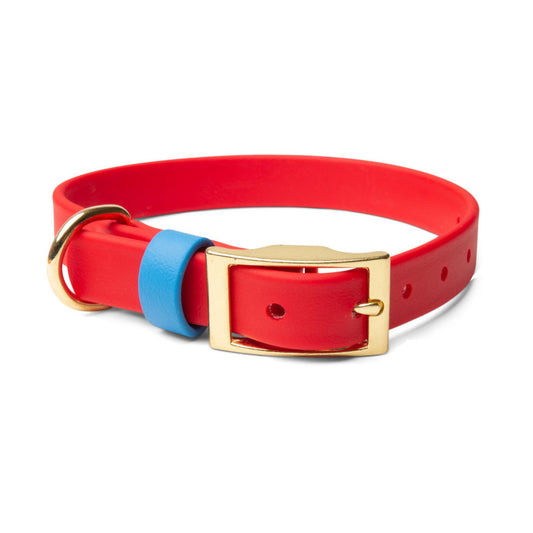
Waterproof Collars
Biothane construction, wipes clean
A secure place to attach a tracker or a tag, built to hold up through swims and muddy trails.
Shop Collars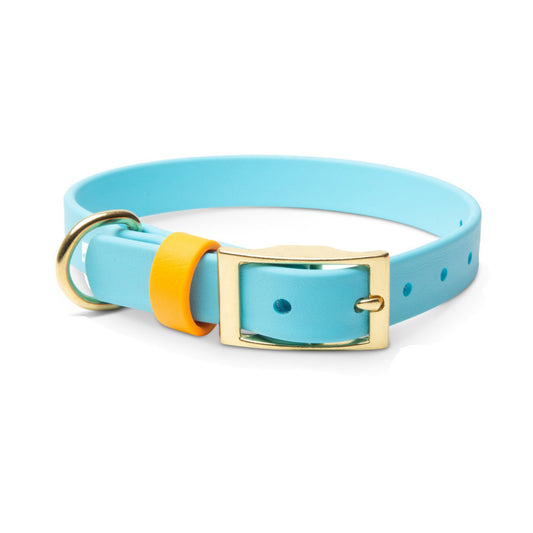

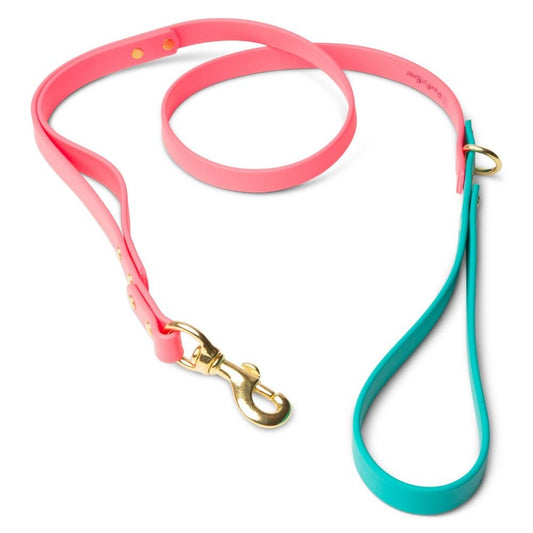
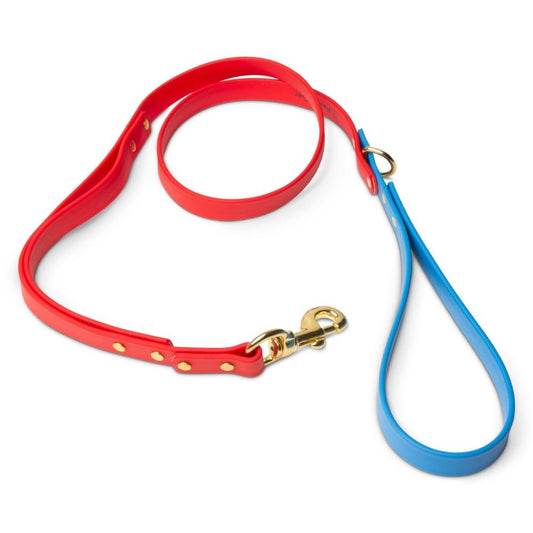
Waterproof Leashes
Biothane construction, matches the collars above
Pairs with the collar as a matching set for training walks and everyday wear.
Shop Leashes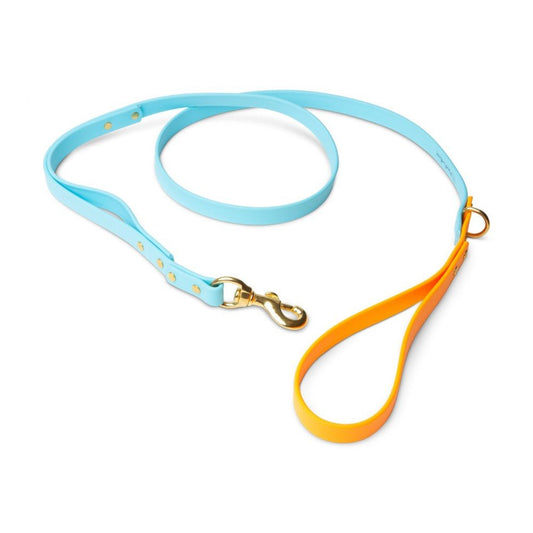

Engraved Dog Tags
Deep engraving, stays legible for years
The tag a neighbor checks first, the exact backup this section is about.
Shop Engraved Tags


Frequently Asked Questions
Is it safe to put an AirTag on a dog collar?
Yes, if it's secured in a well-fitted case. The AirTag poses no health risk; the danger is a loose attachment falling off or being chewed.
What is better than an AirTag for tracking my dog?
A dedicated GPS collar, since it uses satellite and cellular tracking instead of relying on nearby iPhones, so it works in remote areas and updates in real time.
Are AirTags a good idea for dogs?
They can help in populated areas with good iPhone coverage, but Apple doesn't endorse them for pets, and they offer no live tracking like a GPS collar.
How far can an AirTag track my dog?
An AirTag has a Bluetooth range of roughly 30 to 100 feet. Beyond that, it only updates when another Apple device passes nearby, so real-world range is unpredictable.
Do Apple AirTags work on dog collars?
Yes, once secured in a case, but they were never designed for animals and don't work well outside a populated area.
Is it worth putting an AirTag on a dog?
For a mostly indoor city dog, it adds a useful layer of backup. For an outdoor or rural dog, a GPS tracker is the safer choice.
Is a GPS collar worth it?
For most active or outdoor dogs, yes. Real-time tracking and health monitoring offer more dependable peace of mind than a Bluetooth tag.
What is the best GPS tracker for dogs without a monthly fee?
Radio-frequency collars are the main option. They operate independently, without a cellular network or subscription, though range is shorter than cellular models.
Do GPS collars work without cell service?
Cellular GPS collars need coverage to send updates. Radio-frequency collars don't, a better fit for remote properties.
The Bottom Line
An Apple AirTag can be a handy, low-cost backup for a city dog who rarely wanders far. But for pet parents who hike, live rurally, or want to watch a pet's location the moment they go missing, a GPS collar is worth the investment.
Whatever tracker you choose, pair it with a secure, personalized ID collar. It's the simplest, most dependable way to help a good samaritan bring your furry friend home, no battery or app required.
Give your dog the first line of defense: a durable, personalized waterproof collar with an engraved ID tag, made to last through every walk, swim, and adventure.
RELATED POSTS


