

Why Does My Dog's Collar Smell So Bad?
You love your dog. You bathe your dog. Your dog smells fine. But that collar? That collar smells like it's been marinating in a swamp for six months.
Sound familiar? You're not alone. This is one of the most common and most ignored hygiene problems dog owners deal with. And the worst part? Most people think the fix is scrubbing harder. It's not. The fix is understanding why it happens in the first place.
Let's break this down properly.
What Actually Causes That Awful Collar Smell?
Here's the thing most dog owners don't realize: the smell isn't coming from dirt. It's coming from bacteria.
Your dog's neck is warm, slightly moist, and constantly covered. That environment is a paradise for microorganisms. When your dog sweats (yes, dogs do produce moisture through their skin), plays in water, or simply exists on a humid day, that moisture gets trapped between the collar material and their fur.
Traditional collar materials nylon, polyester, cotton, leather are all porous. They absorb this moisture like a sponge. Once water gets inside the fibers, bacteria and yeast move in and start colonizing. According to Orvis, no collar material is immune to odor buildup, as dirt, debris, skin oils, and body moisture all seep into fibers and create a breeding ground for bacteria.
That "funky collar smell" is literally bacterial waste. Appetizing, right?
Why Cleaning Alone Won't Solve the Problem
Now, the internet is full of guides telling you to soak your collar in baking soda, scrub it with vinegar, or throw it in the dishwasher. And sure, those methods work temporarily. A good vinegar-and-baking-soda soak can knock out odor for a couple of weeks.
But here's what nobody tells you: the collar will start smelling again. Every single time.
Why? Because porous materials have a texture at the microscopic level that's full of tiny crevices and fiber gaps. Bacteria don't just sit on the surface they embed themselves deep inside the weave. Even after a thorough wash, some colonies survive and start multiplying the moment the collar gets damp again.
It's like mopping a floor with a dirty mop. You're moving the problem around, not eliminating it.
Dog owners on forums describe this exact frustration. One Golden Retriever owner put it simply: they'd tried vinegar, baking soda, and laundry detergent on the collar, and nothing worked permanently. The consensus from experienced owners? At some point, you either keep buying replacement collars every few months, or you switch to a material that doesn't absorb moisture at all.
The Real Problem Is the Material (Not Your Dog)
Let's get specific about what's going wrong with common collar materials.
Nylon collars are the most popular and the worst offenders. Nylon is woven from synthetic fibers with microscopic gaps between them. Water wicks into these gaps through capillary action, and once inside, it takes hours to fully evaporate especially in humid climates or if your dog swims. During that drying period, bacteria are feasting.
Leather collars have a different problem. Leather is organic material. When it gets wet repeatedly, it doesn't just smell it starts to break down. The natural oils leach out, the leather cracks, and mold can grow in the creases. If you've ever noticed green or white spots on a leather collar that's been through a few swim seasons, that's mold. Cleaning leather with water can actually accelerate this deterioration if you're not conditioning it properly afterward.
Cotton and fabric collars are essentially wearing a permanent wet towel around your dog's neck. They absorb everything, dry slowly, and become odor magnets within weeks of regular outdoor use.
The common thread? All these materials are porous. They let moisture in and hold onto it. And where moisture lives, bacteria thrive.
What Veterinarians Actually Say About This
This isn't just a cosmetic problem. Wet, bacteria-laden collars sitting against your dog's skin can actually cause health issues.
Veterinary professionals note that moisture trapped under collars is a leading contributor to a condition called acute moist dermatitis commonly known as "hot spots." These are painful, inflamed patches of skin that can develop rapidly when bacteria colonize the warm, moist area under a collar.
According to the Continental Kennel Club, wet or dirty collars hold bacteria that can cause skin infections, and dogs with allergies or sensitive skin are even more vulnerable. The symptoms include redness, hair loss around the neck, itching, and in severe cases, open sores that require antibiotics to treat.
Think about that for a second. The collar you bought to keep your dog safe might actually be making them sick all because of trapped moisture.
The Permanent Fix: Non-Porous Collar Materials
So if porous materials are the root cause, the logical fix is switching to a material that's completely non-porous. And the material that veterinarians and pet professionals increasingly recommend is Biothane.
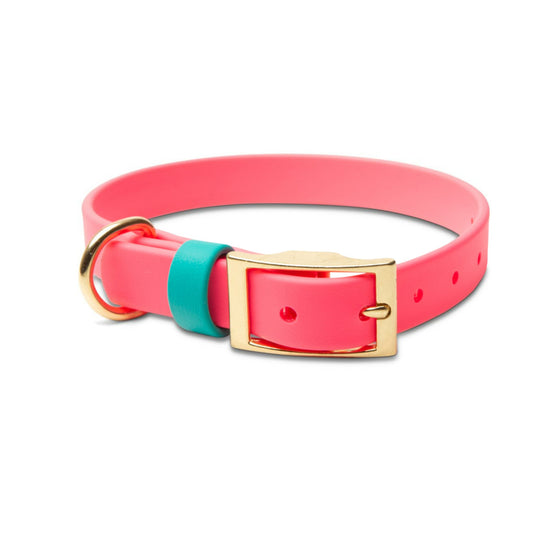
Biothane is a coated webbing material essentially a polyester core bonded with a TPU (thermoplastic polyurethane) or PVC outer layer. Nothing penetrates the surface. Water beads on it and rolls off. There are no fibers for bacteria to embed into, no crevices for moisture to hide in.
CNN Underscored recently consulted veterinarians and dog trainers for their best collar material recommendations. The consensus was clear experts called BioThane durable, completely waterproof, and odor-resistant. One veterinarian specifically noted that it's unlikely to harbor mildew, mold, or bacteria because of the material's sleek, non-porous surface.
This is the difference between treating symptoms and eliminating the cause. You're not masking odor or scrubbing it away temporarily. You're removing the conditions that create odor in the first place.
What to Look for in a Waterproof Dog Collar
Not all waterproof collars are created equal. Some brands slap "water-resistant" on a nylon collar with a light coating and call it a day. That's not the same thing. Here's what actually matters:
Genuine Biothane material. Look for collars made with authentic Biothane coated webbing, not imitation PVC straps. Real Biothane maintains flexibility and doesn't crack or peel over time.
Stainless steel hardware. The collar is only as strong as its weakest component. If the buckle and D-ring rust after a few swims, the waterproofing of the strap is irrelevant. Stainless steel resists corrosion from saltwater, chlorine, and freshwater.
USA-made construction. This isn't nationalism it's quality control. Domestically manufactured collars tend to have tighter stitching, better riveting, and more consistent material quality because of stricter production standards.
Proper sizing options. A waterproof collar that doesn't fit correctly is still going to cause problems. You should be able to fit two fingers between the collar and your dog's neck comfortably. Too tight restricts breathing during activity; too loose creates friction and escape risk.
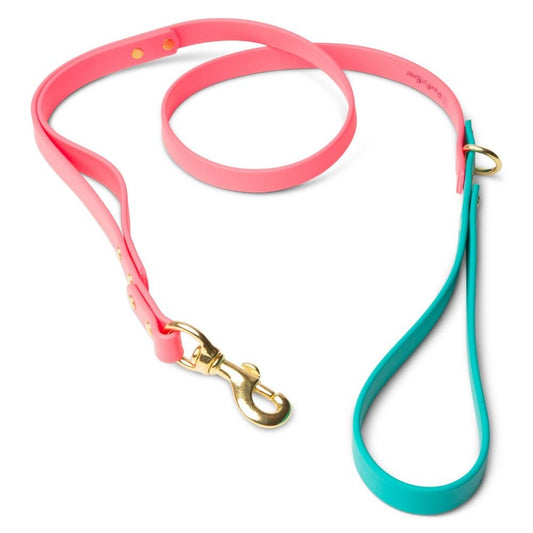
PawFurEver's Biothane collar collection checks all these boxes genuine Biothane material, stainless steel hardware, handcrafted in the USA, and available in multiple sizes and colors. They're designed specifically for active dogs who swim, hike, and roll in everything they probably shouldn't.
Real-World Maintenance: What Life Looks Like After the Switch
Here's what day-to-day collar care looks like with a non-porous material:
Your dog goes swimming. You don't take the collar off. You don't panic. You don't set a mental reminder to wash it later. The collar is fine. Water rolls off. No absorption happens.
Your dog rolls in mud. You wipe the collar with a damp cloth. Done. Maybe 30 seconds of effort.
Three months later? Six months? The collar still doesn't smell. Not because you've been obsessively cleaning it, but because there's literally nothing for bacteria to grow on.
Compare that to the nylon collar cycle: swim → smell → soak in vinegar → smell less for a week → smell again → give up → buy new collar → repeat. Over a year, you might spend more on replacement nylon collars than one quality Biothane collar would cost upfront.
The Cost Math (Because Someone's Thinking It)
Good Biothane collars aren't the cheapest option on the shelf. Let's be honest about that.
But consider this: a typical nylon collar costs $10-$15 and lasts 4-6 months before it's either stinking permanently or fraying. That's roughly $30 per year if you replace it twice, and some active dog owners go through three or four.
A quality Biothane collar runs $25-$40 and, with the durability of non-porous material and stainless steel hardware, lasts years not months. You also spend zero money on cleaning products, deodorizing sprays, or replacement collars.
More importantly, you potentially save on vet bills. One hot spot treatment can easily run $100-$300 depending on severity. Preventing that by keeping your dog's neck dry and bacteria-free is worth more than any collar price tag.
Bottom Line
Your dog's collar smells bad because traditional collar materials trap moisture and grow bacteria. Cleaning helps temporarily, but the cycle will repeat as long as you use a porous material. The permanent solution is switching to a non-porous, waterproof collar specifically one made from genuine Biothane.
Your dog deserves gear that keeps up with them. And your nose deserves a break.
Sources referenced in this article:
-
Orvis : How to Clean a Dog Collar
-
River Road Veterinary Clinic: Hot Spots: Acute Moist Dermatitis in Dogs
-
Continental Kennel Club: How to Prevent Leash Burns and Collar Rashes