

Why Does My Dog's Collar Smell So Bad?
Your dog's collar smells because of trapped bacteria, not dirt. Here's the real cause and the waterproof upgrade that fixes it for good.
You bathe your dog. You brush your dog. Your dog smells like a dog that just had a bath. Then you pick up the collar, and it smells like something that washed up on a beach three days ago.
The smell comes from bacteria, not dirt. Moisture from sweat, rain, drool, and swimming gets trapped inside porous collar materials like nylon, cotton, and leather. Bacteria and yeast then colonize that damp environment and produce the odor. Washing helps temporarily, but the smell returns because bacteria hide deep in the fibers. The lasting fix is switching to a non-porous, waterproof collar material that never lets moisture in to begin with.
If that sounds like your household, keep reading. This is one of the most common complaints pet parents bring up, and it's also one of the most misunderstood.

What's Actually Causing the Smell
Here's the part most pet parents never get told: it isn't dirt making the collar stink. It's bacteria.
Your dog's neck is warm, slightly moist, and covered almost all day. That's an ideal environment for microorganisms. Dogs do produce moisture through their skin, and between that, drool, rain, and time spent in water, the collar is picking up a steady supply of dampness.
Traditional collar materials, nylon, polyester, cotton, and leather, are all porous. They soak up that moisture the way a sponge does. Once water works its way into the fibers, bacteria and yeast move in and start multiplying. According to Orvis, no collar material is fully immune to odor buildup, since dirt, skin oils, and body moisture all seep into the fibers and create conditions bacteria thrive in.
That funky collar smell is, quite literally, bacterial byproduct. Not the most pleasant thought, but an important one for understanding the fix.
Why Washing Never Fully Fixes It
Search "dog collar smells" and you'll find plenty of advice: soak it in vinegar, scrub with baking soda, run it through the wash. These methods genuinely help for a little while. A good soak can knock the smell down for a couple of weeks.
Then it comes back. Almost every time.
Porous materials have countless microscopic gaps and fiber crevices. Bacteria don't just sit on the surface where a wash can reach them; they burrow into the weave. Even a thorough cleaning leaves some colonies behind, and they start multiplying again the moment the collar gets damp.
It's the same principle as mopping a floor with a dirty mop: you're relocating the problem, not eliminating it.
Pet parents describe this exact frustration across forums and reviews. Dog owners who've tried vinegar, baking soda, and laundry detergent on the same nylon collar often land on the same conclusion: either replace the collar every few months, or switch to a material that never absorbs moisture in the first place.
Collar Material Comparison: Which One Actually Smells Least
Not all collar materials are created equal when it comes to odor. Here's how the common options actually stack up.
| Material | Absorbs moisture? | Typical odor timeline | Other downsides |
|---|---|---|---|
| Nylon / polyester webbing | Yes, wicks into woven gaps | Smell returns within days to weeks of regular outdoor use | Slow to dry, holds bacteria in fiber gaps |
| Cotton / fabric | Yes, highly absorbent | Odor within weeks of regular use | Essentially a permanent damp layer against the skin |
| Leather | Moderate, absorbs less than fabric at first | Odor develops as natural oils leach out over repeated wetting | Cracks, stiffens, can develop mold in creases |
| Biothane / waterproof coated webbing | No, non-porous surface | Doesn't develop lasting odor with normal care | Higher upfront cost than basic nylon |
Nylon is the most common offender because it's woven from synthetic fibers with tiny gaps between them. Water wicks into those gaps through capillary action and can take hours to fully evaporate, especially in humid climates or after a swim. Bacteria have plenty of time to settle in during that drying window.
Leather has a different problem. It's an organic material, so repeated wetting doesn't just cause smell, it breaks the material down. The natural oils leach out, the leather cracks, and mold can develop in the creases. Green or white spots on a leather collar after a few swim seasons are a sign of that mold growth. Cleaning leather with water can actually speed up this deterioration if it isn't conditioned properly afterward.
Cotton and fabric collars are, functionally, a permanent damp layer around your dog's neck. They absorb everything and dry slowly, turning into odor magnets within weeks of regular outdoor activity.
The common thread across nylon, cotton, and leather: they're all porous. They let moisture in and hold onto it. And wherever moisture sits, bacteria follow.
Is a Smelly Collar Actually a Health Risk?
This isn't only a nose problem. A collar that stays wet and bacteria-laden against your dog's skin can contribute to real skin issues.
Veterinary sources note that moisture trapped under a collar is a common contributor to acute moist dermatitis, better known as "hot spots." These are painful, inflamed patches of skin that can develop quickly when bacteria colonize a warm, damp area.
The Continental Kennel Club points out that wet or dirty collars hold bacteria that can lead to skin infections, and dogs with allergies or sensitive skin are especially vulnerable. Watch for redness, hair loss around the neck, itching, or open sores; those symptoms sometimes need veterinary attention and antibiotics to resolve.
If your dog swims, hikes, or spends a lot of time outdoors, it's worth doing a quick neck check under the collar every so often, especially during warm, humid months.
The Long-Term Fix: Switching to a Non-Porous Collar
If porous materials are the root cause, the logical fix is a material that doesn't absorb anything at all. That's where Biothane, a coated webbing made from a polyester core bonded with a waterproof outer layer, comes in.
Water beads on Biothane and rolls off. There are no fibers for bacteria to work into, and no crevices for moisture to hide in. Reviewers and pet product experts who cover waterproof gear consistently describe Biothane as a material that resists mildew, mold, and bacteria because of its sleek, non-porous surface, unlike traditional woven or organic materials.
This is the difference between managing symptoms and removing the cause. You're not masking odor with a spray or scrubbing it away for a week at a time. You're taking away the conditions bacteria need to grow.
What to look for in a waterproof dog collar
Not every collar labeled "water-resistant" performs the same way. Some are simply a nylon collar with a light coating, which is a different thing entirely. Look for:
- Genuine Biothane or coated waterproof webbing, not an imitation coating that peels or cracks over time.
- Stainless steel hardware. A waterproof strap doesn't matter much if the buckle or D-ring rusts after a few swims.
- Durable, quality construction, since tighter stitching and consistent materials mean a collar that holds up to years of use.
- A proper fit. You should be able to comfortably fit two fingers between the collar and your dog's neck; too tight can restrict breathing, too loose can create friction or an escape risk.
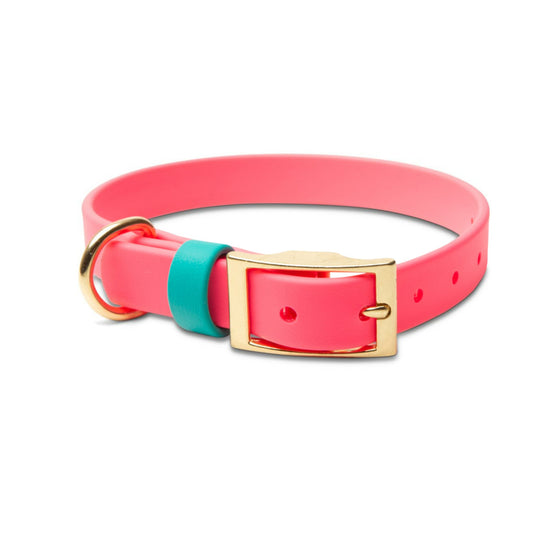
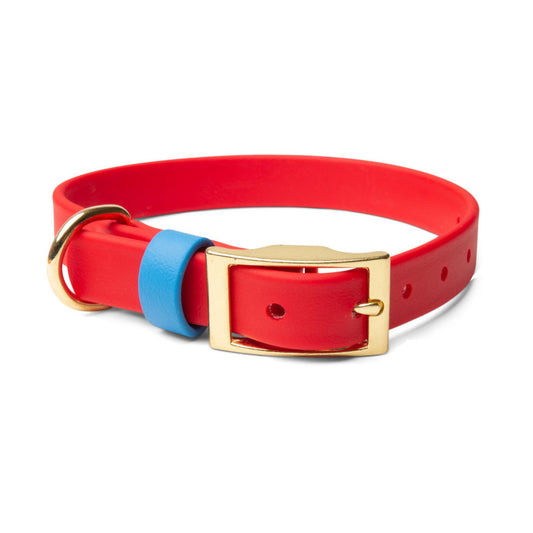
PawFurEver's Biothane dog collar collection is built around these standards, with stainless steel hardware and a range of sizes and colors for active dogs who swim, hike, and roll in everything they probably shouldn't.

Waterproof Collars
From $19.99 · Biothane construction
The non-porous fix this section is about, wipes clean, never holds onto odor.
Shop Collars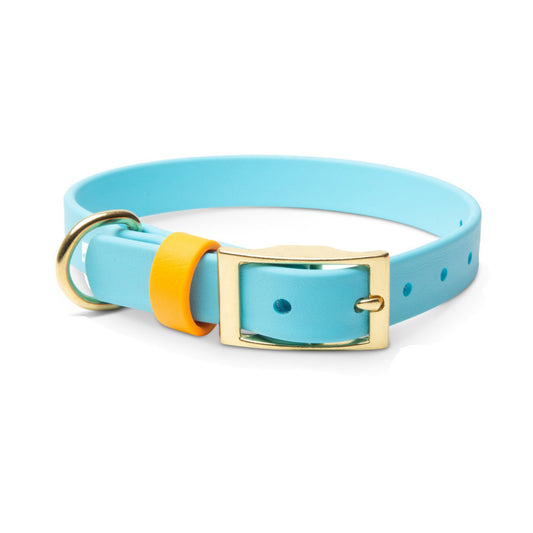
What everyday care looks like after the switch
Your dog goes swimming. You don't take the collar off, and you don't set a reminder to wash it later, because there's nothing to soak in.
Your dog rolls in mud. You wipe the collar down with a damp cloth. That's it.
Months later, the collar still doesn't smell, not because you've been scrubbing it constantly, but because there's nothing left for bacteria to grow on.
Compare that to the typical nylon cycle: swim, smell, soak in vinegar, smell less for a week, smell again, eventually replace the collar. Over a year, that cycle can add up to more spending than one durable waterproof collar would have cost upfront.
Is It Worth the Cost? A Real Comparison
A basic nylon collar runs about $10 to $15 and often needs replacing every four to six months once it starts smelling permanently or fraying. That can add up to $30 or more per year, and some active pet families go through several a year.
A quality Biothane collar typically runs $20 to $40 and, thanks to the durability of a non-porous material and solid hardware, can last for years rather than months. There's also nothing extra spent on deodorizing sprays, cleaning products, or replacement collars.
There's a less obvious savings angle too: preventing even one hot-spot treatment, which can run well over $100 depending on severity, is worth more than the price difference of a better collar.
Frequently Asked Questions
Why does my dog's collar smell so bad even after washing?
Because porous materials like nylon, cotton, and leather trap bacteria deep in their fibers. A wash removes surface grime and knocks the smell down temporarily, but some bacteria survive inside the material and start multiplying again as soon as the collar gets damp.
What kills the smell in a dog collar?
A vinegar-and-baking-soda soak or a thorough wash with pet-safe soap can reduce odor temporarily on absorbent materials. For a lasting fix, switching to a non-porous, waterproof material like Biothane prevents the odor-causing bacteria from taking hold in the first place.
Can a smelly collar hurt my dog's skin?
Yes, it can. Moisture trapped under a collar is a known contributor to acute moist dermatitis, commonly called hot spots, which are painful, inflamed patches of skin. Dogs with sensitive skin or allergies are more prone to this.
How often should I clean my dog's collar?
For absorbent materials, a light wipe-down after wet or muddy activity and a deeper wash every one to two weeks helps manage buildup. Waterproof, non-porous materials only need an occasional wipe with a damp cloth.
Is Biothane better than leather for dogs that swim?
For dogs that swim regularly, yes. Leather absorbs moisture over time, which leaches out its natural oils and can lead to cracking or mold in the creases. Biothane is non-porous, so water doesn't penetrate it at all.
How long do waterproof dog collars last?
A well-made waterproof collar with stainless steel hardware and genuine coated webbing can last several years of regular, active use, considerably longer than typical nylon or cotton collars that need replacing every few months.
Bottom Line
Your dog's collar smells bad because traditional materials trap moisture and let bacteria settle in. Cleaning helps for a little while, but the cycle repeats as long as the collar itself is porous. The lasting fix is a non-porous, waterproof collar made from genuine coated webbing like Biothane, paired with rust-resistant hardware and a proper fit.
Your dog deserves gear that keeps up with their adventures, and your nose deserves a break. Explore PawFurEver's waterproof Biothane collars and give your pet family a collar that actually stays fresh.
Shop Waterproof Collars- Orvis: How to Clean a Dog Collar
- River Road Veterinary Clinic: Hot Spots: Acute Moist Dermatitis in Dogs
- Continental Kennel Club: How to Prevent Leash Burns and Collar Rashes