

Retractable vs Fixed-Length Dog Leash: Which Is Safer?

You're standing in the leash aisle holding two very different products. One is a plastic handle with a thin cord that spools out to 16 feet or more. The other is a simple fixed strap, usually 4 to 6 feet long. Both promise to keep your dog close and safe, but they go about it in almost opposite ways.
That difference matters more than most pet parents realize. Dog-walking injuries send tens of thousands of U.S. adults to the emergency room every year, and the leash in your hand plays a direct role in how much control you have when your dog lunges, bolts, or decides a squirrel is worth chasing.
This guide compares retractable and fixed-length leashes on safety, using published injury research rather than opinion, so you can choose the right leash for your dog's size, training level, and daily routine.
Quick answer: A fixed-length leash is the safer everyday choice because it gives you constant, predictable control over your dog's distance and speed. Retractable leashes aren't automatically unsafe, but their thin lines, sudden stops, and easy-to-drop handles are linked to documented injuries to both dogs and the people walking them.
A retractable can still work in specific, low-risk settings (an open field, a quiet trail, a well-trained dog), locked short near roads, people, or other animals. For neighborhood walks, busy sidewalks, or a dog that still pulls, a dependable fixed-length leash is the better default.
What Is a Retractable Dog Leash?
A retractable dog leash is a handheld spool, usually plastic, that houses a thin cord or flat tape line. The line extends under spring tension as your dog moves away and winds back in as your dog comes closer. A button on the handle locks the line at a set length or applies the brake.
Most models extend 10 to 26 feet, with 16 feet being the most common. That's the appeal: your dog gets more room to sniff and explore without you feeding out slack by hand.
How the Locking Mechanism Works
Retractable leashes rely on a brake button that you have to actively press and hold. If your thumb slips, or the button is only partly engaged, the line can spool out at full speed the moment your dog surges forward. That one mechanical detail is behind many of the injuries described below.
Are Retractable Leashes Safe? What the Research Shows
The answer is nuanced, and many articles on this topic skip the actual research. Here's what the numbers say.
422,659 Adult ER Visits in 20 Years
A Johns Hopkins study published in Medicine & Science in Sports & Exercise (2023) analyzed U.S. emergency department records from 2001 to 2020 and estimated that 422,659 adults were treated for injuries while walking a leashed dog. Annual cases nearly quadrupled over that period, from 7,282 in 2001 to 32,306 in 2020.
- 75% of injured adults were women.
- 47% were between 40 and 64 years old.
- 55% of injuries came from falls, such as tripping over the leash or being pulled by the dog.
- 51% of injuries affected the upper limbs (hands, wrists, fingers, shoulders).
- The three most common diagnoses were finger fractures, traumatic brain injury, and shoulder sprains or strains.
- Adults 65 and older were more likely to suffer fractures than younger adults, and women were more likely than men.
A companion study in the Journal of Pediatric Orthopaedics covering the same 20 years estimated that 35,611 children were treated in U.S. emergency departments for injuries while walking a leashed dog.
One important limitation: these large studies track leash-walking injuries overall and don't break results down by leash type. We aren't going to gloss over that.
What We Know About Retractable Leashes Specifically
Where the evidence does get specific about retractable leashes, the picture is less flattering:
- A 2024 review in the journal Hand studied 443 outpatient hand and wrist dog-leash injuries. Most patients were women, the most common injury was a finger fracture, and about one in five cases required surgery.
- In 2008, the U.S. Consumer Product Safety Commission announced a recall of retractable dog leashes after the metal clasp that attaches to the collar was found to break during use, letting the line snap back toward the person holding it. Reported injuries included facial cuts, a fractured tooth, and an eye injury.
- The American Kennel Club, PetMD, and many trainers and veterinarians warn that thin retractable cords are more likely to cause rope burns and cuts than flat tape lines, and are harder for other people to see, which raises the risk of trips and tangles.
Pet parent tip: If you already own a retractable leash, check whether it uses a wide, flat tape line or a thin round cord. Cord-style lines concentrate force into a much smaller surface, which makes finger and skin injuries more likely if you ever grab the line.
Retractable vs. Fixed-Length Leash: Side-by-Side
| Feature | Retractable Leash | Fixed-Length Leash |
|---|---|---|
| Distance control | Variable, up to 26 ft; changes constantly unless locked | Constant, known distance (typically 4 to 6 ft) |
| Response time in an emergency | Slower; you have to press and hold a brake button | Immediate; the whole length is already in your hand |
| Injury risk to handler | Higher; a thin line can cause burns, cuts, or finger injuries under sudden tension | Lower; a wider strap spreads force across your hand |
| Risk if dropped | Higher; the clattering handle can spook a dog into bolting | Lower; a dropped leash simply drags on the ground |
| Visibility to others | Low; a thin line is hard to see, especially at dusk | Higher, especially with reflective or brightly colored straps |
| Mechanical failure risk | Present; the spring, brake, or clasp can jam or break | Minimal; no internal moving parts |
| Effect on leash training | Can reinforce pulling, since tension is always present | Supports loose-leash training with consistent feedback |
| Best suited for | Well-trained dogs in open, low-traffic spaces | Everyday walks, cities, vet visits, dogs still in training |
The Real Risks of Retractable Leashes
Injuries to Pet Parents
The most common handler injuries are rope burns and cuts from grabbing the line to stop a lunge, and finger injuries when the cord wraps around a finger under load. Falls are also a major factor: tripping over a thin, hard-to-see line, or being pulled off balance when a dog hits the end of the leash at full speed.
Risks to Dogs
When a dog sprints to the end of a retractable line, the sudden stop transfers force straight to the neck. Veterinarians warn this can strain the trachea and neck. Small dogs and flat-faced breeds (like French Bulldogs and Pugs) are especially vulnerable to that kind of abrupt jolt.
Mechanical Failure and Sudden Retraction
Springs wear out, brakes stick, and clasps can bend or break, as the 2008 recall showed. A line that suddenly releases or snaps back at speed can strike the person holding it, which is how facial cuts, eye injuries, and broken teeth have been reported.
Less Control in Crowded or Unpredictable Spaces
With a 16-foot line, your dog can be halfway across the street, greeting a stranger, or nose-to-nose with another dog before you can react. In parking lots, on busy sidewalks, or anywhere off-leash dogs might appear, that extra distance takes away your ability to step in quickly.
When a Fixed-Length Leash Is the Safer Choice

For most everyday situations, a fixed-length leash is simply the more dependable option. It keeps your dog within arm's reach near traffic, other dogs, and crowds. It gives you direct, physical control with no button to press. And it supports the consistent, loose-leash training that makes every future walk calmer.
- City and suburban walks where cars, cyclists, and other pedestrians share the space.
- Vet visits, pet stores, and friends' homes where close control matters.
- Puppies and dogs still learning loose-leash walking, since consistent feedback builds good habits faster.
- Reactive or anxious dogs, who benefit from a shorter, more predictable distance from their pet parent.
When (and How) a Retractable Leash Can Work Safely
Best Situations for a Retractable
Retractable leashes were never meant to replace a standard leash for daily neighborhood walks. They can be a reasonable tool in an open, low-traffic area, like an empty field or a quiet trail, with a dog who already has reliable recall and doesn't pull hard against tension.
Safety Rules If You Use One
- Choose a wide tape-style line over a thin cord.
- Lock the leash short any time another person, dog, cyclist, or road is nearby.
- Never let a child hold the handle; a sudden pull can easily yank it out of a small hand.
- Check the clasp, spool, and brake button regularly for wear, cracks, or sticking.
- Keep the line short enough that your dog can't build up speed before you can stop them.
Pet parent tip: If what you really want is more roaming room in an open space, a long line (a 15 to 30 foot lead with no retracting mechanism) gives your dog similar freedom without the spring-loaded risks. Many trainers recommend long lines over retractables for exactly this reason.
How to Choose the Safest Leash for Your Dog
Before you buy, run a quick check on three things: your dog's training level, your walking environment, and your dog's size and strength. If any one of them points to "not ready yet" or "unpredictable," go with a fixed-length leash.
By Dog Size and Strength
Small Breeds and Puppies
Smaller dogs pull with less force, but they're also more vulnerable to neck injury from a hard, sudden stop. A lightweight fixed-length leash and a well-fitted collar or harness is usually the safer combination for puppies and toy breeds still learning leash manners.
Large or Strong Breeds
A 70-pound dog hitting the end of a retractable line at a sprint can generate enough force to injure your hand or pull you off your feet. For large, strong, or high-energy dogs, a sturdy fixed-length leash gives you the leverage and control you need.
By Training Level
Picture Bella, a leash-trained Labrador with rock-solid recall. Her pet parent sometimes uses a locked-short retractable on quiet weekend trail walks, and it works because Bella rarely tests the line. Now picture Milo, a recently adopted terrier mix who still pulls toward every squirrel and stranger. A retractable would reward that pulling and put Milo and his new family at real risk. Milo's safer path is a standard fixed-length leash and consistent training.
By Environment
Urban sidewalks, apartment hallways, vet waiting rooms, and anywhere near traffic call for a fixed-length leash. Open fields and quiet, low-traffic trails are the settings where a retractable's extra length starts to make sense.
Beyond the Leash: Building a Complete Safety Routine
No leash, fixed or retractable, removes every risk. Hardware can fail, dogs can slip a collar, and surprises happen even to careful pet parents. That's why your leash should be one part of a broader safety routine, not the only line of defense.
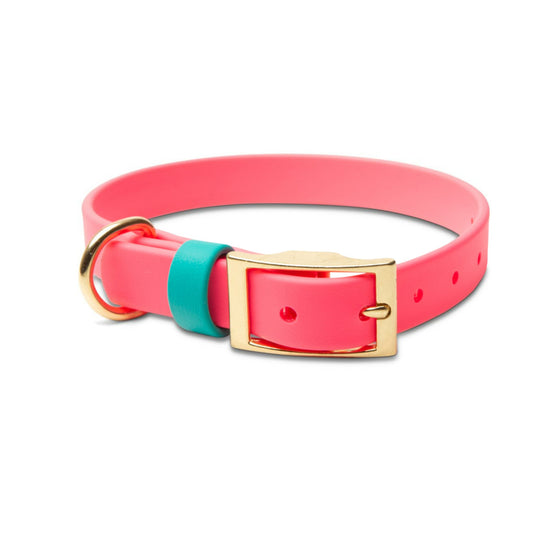
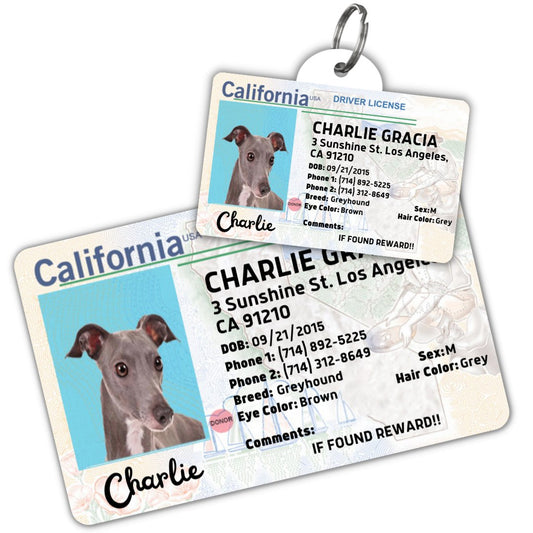
A well-fitted waterproof collar with solid hardware lowers the chance of an accidental slip in the first place. And because even the most attentive pet parent can lose hold of a leash in a startling moment, a clear, up-to-date ID tag gives anyone who finds your dog a fast way to reach you.

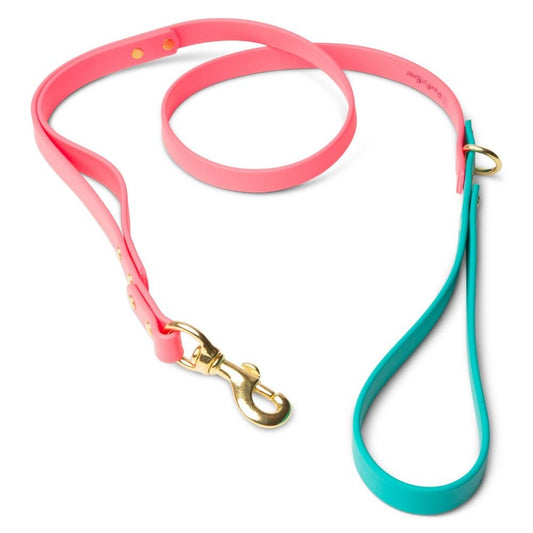
Waterproof Biothane Dog Leash
Fixed-length biothane · 4.5 ft or 6 ft · 3/4 in wide
Made from waterproof, odor-resistant biothane with solid brass and nickel-plated hardware, plus a traffic handle above the snap hook for close control when it counts. Wipes clean after muddy walks. Available in 7 colorways, including reflective options, with matching collars.
Shop Waterproof Leashes
Personalized QR Code Dog Tag
Stainless steel · 30 mm circle · Silver, Gold or Rose Gold
A 3-tone laser-engraved front with your pet's name, and a laser-etched QR code on the back that links to your pet's contact profile. Anyone who finds your dog can scan it with a regular smartphone camera, no app needed.
Shop QR Dog TagsThink of it as layered protection: a leash built for control, a collar built to stay on, and a personalized ID tag that helps bring them home if the unexpected ever happens.
The takeaway: Fixed-length leashes offer more consistent control and lower injury risk for daily walks, while retractable leashes trade that control for extra roaming room best saved for open, low-traffic spaces and a well-trained dog. Whichever you choose, pair it with a secure collar and a visible ID tag.
Frequently Asked Questions
Are retractable dog leashes safe?
They aren't automatically unsafe, but they carry documented risks that fixed-length leashes don't: rope burns, finger injuries, mechanical failures, and less control if a dog bolts. Used thoughtfully (locked short around people and traffic, with a trained dog, in an open space) they can be reasonably safe. As an everyday city leash, they carry more risk than a standard leash.
What is the safest length for a dog leash?
For everyday walks in populated areas, most trainers recommend a fixed leash in the 4 to 6 foot range. That keeps your dog close enough for quick control near traffic, people, and other animals. Within that range, the right length depends on your dog's size, your walking area, and personal preference.
Why do trainers dislike retractable leashes?
The constant tension on the line can accidentally reward pulling, and the delay of reaching for the brake button makes it harder to stop a dog from lunging, bolting, or getting tangled.
Can a retractable leash hurt my dog?
Yes. A dog that hits the end of the line at full speed gets a sudden jolt to the neck, which veterinarians link to tracheal and neck strain, especially in small breeds and flat-faced dogs.
What's the difference between a retractable and a fixed-length leash?
A retractable leash uses a spring-loaded spool that extends and retracts, typically up to 16 to 26 feet, and locks with a button. A fixed-length leash is a set length of strap, usually 4 to 6 feet, with no internal moving parts.
Are retractable leashes okay for small dogs?
Small dogs pull with less force, but they're more vulnerable to neck injury from a sudden stop at the end of the line. A fixed-length leash with a well-fitted collar or harness is generally the safer combination for small breeds.
When should I not use a retractable leash?
Skip retractables in crowded areas, near roads, at the vet, in pet stores, around other dogs, and with any dog that hasn't yet mastered loose-leash walking or reliable recall.
What's a safer alternative to a retractable leash?
A standard fixed-length leash for daily walks, or a long line (15 to 30 feet, no retracting mechanism) for supervised freedom in open spaces.
The Bottom Line
Retractable leashes aren't the villain some articles make them out to be, but they aren't the safest everyday choice either. Leash-walking injuries are common, and where retractables have been looked at specifically, thin cords and mechanical failures come up again and again. For most walks, a dependable fixed-length leash gives you faster reactions, steadier training feedback, and fewer parts that can fail.
Whichever leash you choose, pair it with a secure collar and a personalized ID tag. It's a simple backup that gives you real peace of mind on every walk.
Give every walk a dependable setup: a waterproof leash, a secure collar, and a personalized ID tag made just for your pet.
Shop Personalized Dog Tags